Bible Study
-
Two months after Haggai’s first message, on the twenty-first day of the seventh month, the word of the Lord comes to him again. The temple work has begun, and the people have gathered at the site for the Festival of Tabernacles, a joyous feast. The younger generation, the ones who came back from exile and have never known anything else, are happy simply to have built something with their own hands. But Ezra records something else happening in the same crowd. The older generation, the few who were there when they last saw Solomon’s temple standing in its full glory,…

-
This is the second Psalm in the series “A Song of Ascents.” Its main message is that we can trust God. People in those days may have sung it while travelling, when robbers and other dangers threatened them on the road. Remember Ezra, when he was returning from Babylon. He was ashamed to ask the king for soldiers to guard him and the valuable gifts he carried, because he had often told the king that God protects everyone who seeks Him (Ezra 8:22). Ezra did not change what he believed when danger came. He stayed firm and showed that the…

-
While we have accounts of prophecies that have been fulfilled, the real question is whether those Scriptures have been fulfilled in our own lives. We turn to historical evidence to see God’s prophecies come to pass, and we often look to the life of Jesus and to other biblical figures in whom they were fulfilled. Yet we are afraid to claim those prophecies for our own lives, because we have set them apart for Jesus and a few others whom we have placed on a high pedestal. Jesus left His glory to live among us on a par with us…

-
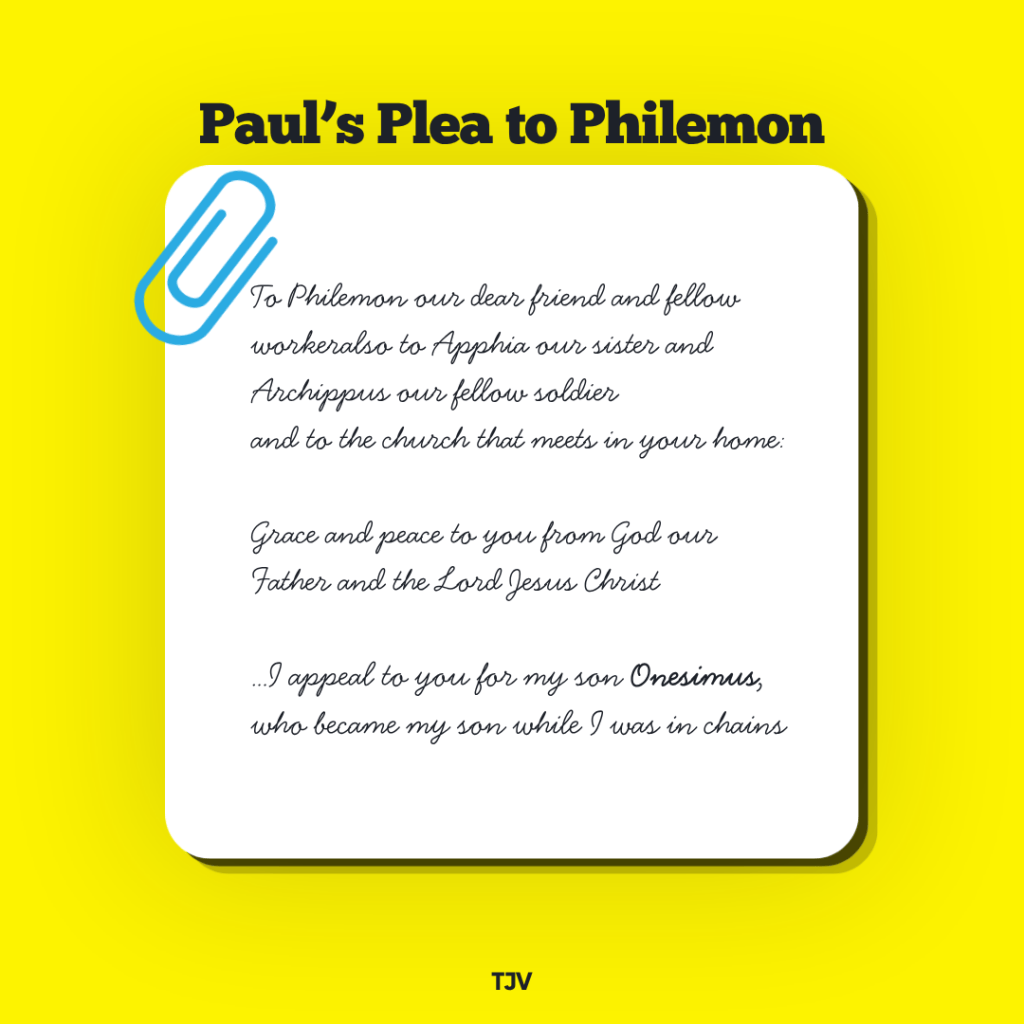
Philemon is the shortest letter Paul ever wrote, and perhaps the most personal. It is addressed to a believer named Philemon, most likely someone Paul met or influenced during his missionary work out of Ephesus. Philemon is a prominent, wealthy man living in Colossae, and the person named right after him, Apphia, is probably his wife. That is nearly all we know about him. We are told even less about Onesimus, Philemon’s bondservant, who at some point ran away, most likely after taking something that was not his, breaking whatever relationship the two had. Somehow Onesimus lands in the very…
-
Haggai belongs to the very first group that returned to Jerusalem under King Cyrus’s decree, some fifty thousand Jews led by Zerubbabel the governor and Joshua the high priest, about fifty years after the exile began. Their stated purpose was simple: go home and rebuild the temple. But between local opposition from governors and Samaritans who did not want to see Jerusalem restored, and their own drifting attention, the project stalled. For sixteen years, the returned exiles forgot why they had come back at all. They stopped building God’s house and started building their own, and building them well, with…
-
It is common for each of us to turn to God when we are in trouble or in dire need. Sadly, for many, prayer has come to mean little more than making our needs known to Him and asking Him to supply our daily necessities, perhaps echoing Jesus’ teaching to pray, “Give us this day our daily bread” (Matthew 6:11). At times, we see God as a provider and hand Him a long list of requirements. At other times, we want Him to be our enforcer, someone who will protect us by striking down our enemies. Sometimes we treat Him…
-
There is a longing in every believer to receive the Holy Spirit, and so they run frantically from church to church, convention to convention, meeting to meeting, anointing session to anointing session, in hope of receiving Him. Most fast and pray for days on end, longing to be filled with the Spirit. But the truth is that we seek God and confess Jesus as Christ because the Holy Spirit already dwells within us—and we remain ignorant of this truth because we crave outward signs of His manifestation. When we receive the Holy Spirit yet see none of those signs, we assume His…
-
The disciples and followers of Jesus devoted themselves to meeting together constantly in prayer, along with the women, Mary the mother of Jesus, and his brothers. When the day of Pentecost came, they were all together in Jerusalem, just as they had been gathering daily since his ascension, waiting for the promised Counselor Jesus had told them about. When the day of Pentecost came, they were all together in one place.Acts 2:1 (NIV) What was this Day of Pentecost? Pentecost means “fiftieth day,” marking the start of a Jewish holiday that fell fifty days after Passover. It was also known…
-
After the long back-and-forth between Habakkuk and God, and after Habakkuk finally receives the guidance he had been pleading for, he breaks into song, a prophetic prayer that gathers up everything he has heard about God, everything he has been taught about God, and everything he himself has come to feel in God’s presence. It opens with a confession that many of us would have prayed or at least thought in our hearts. LORD, I have heard of your fame; I stand in awe of your deeds, LORD. Repeat them in our day, in our time make them known; in…

-
As we complete our meditation on Psalm 119 with this final portion, we have certainly gained spiritual insight by connecting each Hebrew letter to its portion and uncovering its hidden meaning. Yet, in doing so, we may have missed the poetic rhythm of this Psalm — for every line within each portion begins with the Hebrew letter assigned to it, and it is this pattern that produces the rhythm we may not have fully appreciated. Psalm 119 concludes with this final portion, falling under the last Hebrew letter, ת (Taw), which conveys the meaning “Mark” or “Seal”. When we complete…
-
Rooted deeply in both the Old and New Testaments, the practice mirrors actions by figures like Moses commissioning Joshua, and Jesus or the Apostles healing the sick and bestowing the Holy Spirit. Denominations view the physical touch not as possessing inherent magical power, but as a focal point for faith and an outward sign of God’s invisible work. Yet this idea is sometimes distorted into a misunderstanding: that people blessed with the inherent power of the Holy Spirit are the ones authorised to bestow it upon others by laying their hands on them. There is a physical pattern in God’s…
-
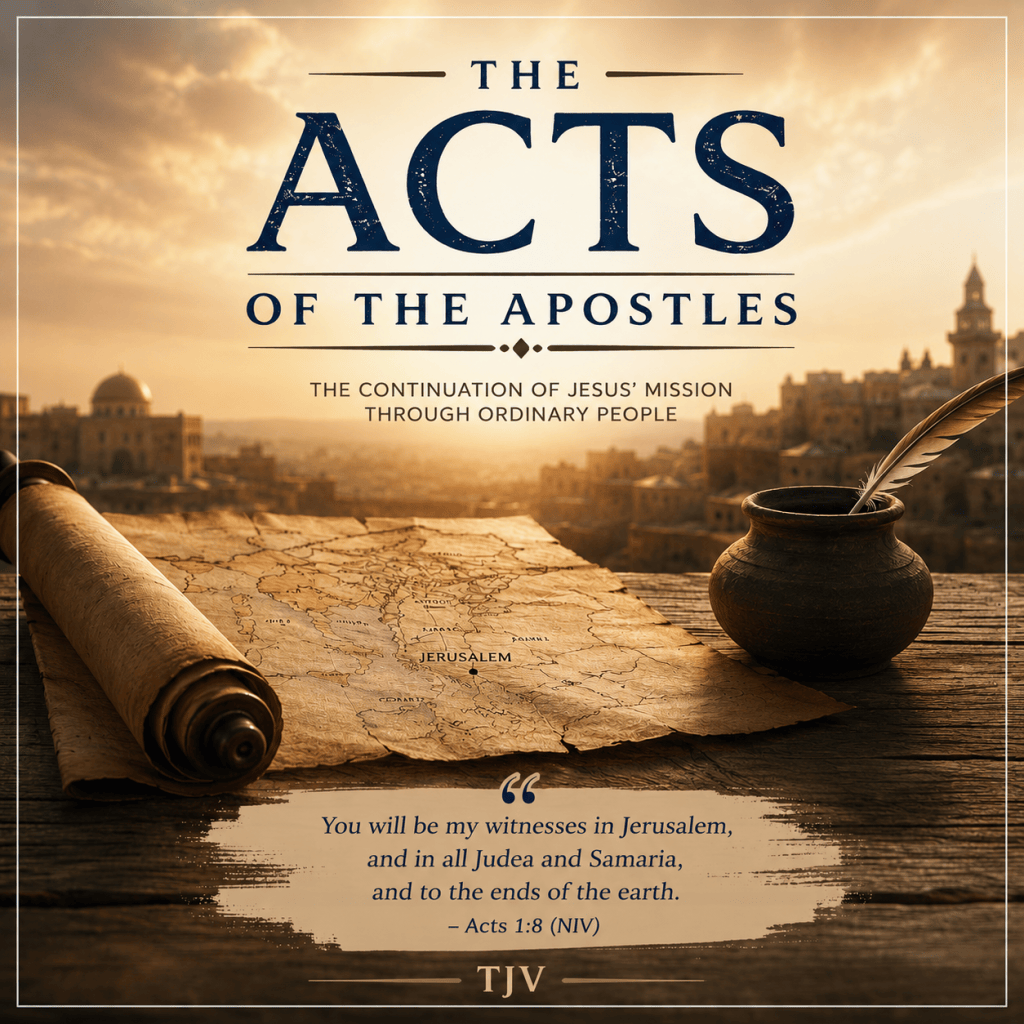
Luke opens his second letter to Theophilus by picking up the thread of his first book, the Gospel that bears his name. If that first account was the record of all that Jesus began to do and teach, this second account is the record of what Jesus continues to do and teach, now through His apostles, by His Spirit, in the early Church. Luke’s careful research does not end at the empty tomb. It carries on into the streets of Jerusalem, into the upper room, and into the lives of ordinary men who were about to be sent into the…
-
After God answers Habakkuk’s first complaint by simply stating the terrifying qualities of the Babylonian army He is raising up, Habakkuk brings a second complaint before Him. If God is the Holy One, the ancient of days, too pure to tolerate wrongdoing, why does He remain silent while the treacherous swallow up those more righteous than themselves? Habakkuk compares God’s people to the fish in the sea, creatures with no ruler to protect them, and the Babylonians as fishermen who pull them all up with hooks and nets, gather them, and rejoice. God Does Not Seek Credit Therefore he sacrifices…
-
This portion of Psalm 119 falls under the Hebrew letter ש (Shin), which means “flames of fire”. We often associate flames with cooking, or with destructive forces of nature such as forest fires. Fire reduces everything to ashes, and it melts metals and alters their shape. In AD 70, the Roman general Titus besieged and seized Jerusalem, and the temple was burned. This fulfilled the prophecy of Jesus that not one stone of the temple would be left standing upon another, but that each would be thrown down (Matthew 24:2). The Jewish historian Josephus records the burning of the temple…
-
Israel had reached the point of believing that God had grown deaf to them, that His hand had somehow become too short to save, and that Satan’s hand had grown longer than His. This is a familiar place for people to arrive at when trouble comes and prayers seem to go unanswered: they quietly begin to believe that God is not listening, or that He is not working on their behalf, and so they start drifting away from Him. In response, God wants to do two things. First, He wants to correct this misunderstanding about who He is. Second, He…
-
Paul ends his letter to the Romans with one final teaching about submission to people in authority placed over us by God. He states that the night is far gone and the day is at hand. He urges his audience to lay aside the deeds of darkness and clothe themselves instead with the Lord Jesus Christ, no longer living to satisfy the desires of the flesh. This call to walk in the light serves as the foundation for addressing a different kind of darkness altogether—not sin committed openly, but the quiet, corrosive habit of dividing over disputable matters, judging one…
-
Most prophetic books carry a message from God delivered to a nation, calling it to repent, explaining why judgment has come or is coming. Habakkuk carries no such message. It is not addressed to Judah or any specific group of God’s people. It is a personal conversation between a man and God, where Habakkuk questions and God’s replies. Habakkuk prophesied before the Babylonians invaded Judah, so he was probably a contemporary of Jeremiah and Zephaniah, writing after the northern kingdom of Israel had already fallen but before Judah followed it into exile. Questioning God While the prophets around him were…
-
This portion of the Psalm falls under the Hebrew letter “ר” (Resh), meaning “head” or “leader.” It is noteworthy that the Psalmist asks God to preserve his life — a prayer that also appeared in the previous section. Clearly, the Psalmist was concerned about his earthly life, and whenever a threat arose from his adversaries, he raised his voice to God to preserve it. Yet there is a deeper sense to this prayer: that of someone asking God to preserve their soul, which was perishing as the outcome of God’s own law — that the wages of sin is death.…
-
Prayer meetings built around fasting and public declaration have become a familiar sight, especially in seasons of national crisis or on the eve of elections. Believers gather on platforms, raise their voices, name the failures of leaders and nations, and call it intercession. It has the appearance of righteousness — burdened prayer, sacrificed meals, raised hands. But Isaiah 58 opens with a command that, on the surface, seems to endorse exactly this kind of exercise, and it forces us to ask what God is really asking for when He tells His people to cry aloud. Shout it aloud, do not…
-
Paul, writing from prison, calls the church in Rome to something that runs against every natural instinct we have — complete submission to the governing authorities. Not just the authorities we agree with, or the ones that seem fair, but all of them. This was a radical instruction, especially coming from Paul, who himself had brushes with both religious and governing authorities. The idea was not novel; it was something that Jesus had preached decades earlier. Yet, this is often one of the most ignored instructions in the Scriptures for believers, as submitting to our authorities, especially when we are…
-
After the long stretch of Job’s suffering, after his friends had come one by one to console him and, in the name of consoling him, had only interrogated and accused him, the voices finally fall silent. And it is only then, when everyone has said their piece and no one has anything left to say, that the LORD speaks. Then the LORD spoke to Job out of the storm. Job 38:1 (NIV) Why does God speak to Job “out of the storm”? The storm could be read the way it was for Elijah — a great wind carrying the presence…

-
It is by the grace of God that the Psalmist, in this portion of the Psalm, realised the everlasting existence of the law of God. The steadfast love captured the Psalmist’s attention, and this poses a question to us: how much do we truly know of the everlasting covenant of God? Concerning the law, it is written that the wages of sin is death, and God warned Adam and Eve that if they disobeyed and ate of the fruit of the tree of the knowledge of good and evil, they would surely die. God did not repeal the law but…
-
There is a peculiar tragedy in the language Scripture uses to describe our relationship with God. He is not merely our Creator or our Sovereign — He is our Father, and we are called His children. Yet Scripture does not shy away from a painful diagnosis: His children are often not true to Him. We live as sons and daughters who bear the Father’s name whilst not living a life loyal to Him. And yet — this is the wonder of the Gospel — the Father who has every right to disown unfaithful children, pursues us still. This introduction, then,…
-
After dealing with Jesus’ first commandment to love God above everything and to make your life a living sacrifice according to His purpose, Paul moves on to the second commandment — about how we should be dealing with God’s creations, and what love for one another truly looks like in practice. Sincere Love Requires Discernment Love must be sincere. Hate what is evil; cling to what is good.Romans 12:9 (NIV) How can we hate evil and love good if we don’t know what is good according to God? In order to genuinely hate evil and love what is good, we…
-
After Job’s three friends run out of things to say, a younger man steps forward — Elihu, son of Barakel the Buzite, of the family of Ram. He is the only person in the book of Job with a Hebrew name, and the fourth person to give reasoning to Job’s suffering. He has waited this whole time, giving his elders the chance to speak first, out of respect (or perhaps out of fear) even though he was dying to speak. And now, with the three friends silenced and no closer to convincing Job of anything, Elihu finally lets out his…
-
This portion of the Psalm falls under the Hebrew letter “צ” (Tsadhe), which conveys both a literal and a colloquial meaning. Formally, this letter represents righteousness — more deeply, the righteousness of God. Informally, it carries the sense of a hook or fishhook. Though these two meanings appear to contradict one another, a shared trait binds them together as inseparable aspects of the same truth. The author expresses how his zeal for knowing God consumed him — an idea already brought out in Psalm 69:9. As we work through this portion of the Psalm, we ought to examine ourselves: what…
-
Having been redeemed by God our Father, we naturally consider ourselves part of the chosen people, and we regard those who do not yet know what God has done for them as standing outside that chosen family. Similarly, when we see someone we love pass through deep trial without visible struggle, or someone gifted at preaching the Gospel, we are tempted to view them as marked out for something extraordinary — a “chosen vessel,” destined for public ministry or renown. That instinct is not wrong, but it needs correcting in one important respect: being a chosen vessel is not a…
-
From the days of Cain and Abel, when two brothers brought the fruit of their labor before God, people have been bringing part of their earnings as an offering to Him. That instinct has never left us, as down through the generations, mankind has always found a way to bring an offering—a ritual, a tithe, a service, a gesture. Yet, God told the prophet Isaiah plainly that He detests such offerings when they come from hearts that are not tuned to Him. “The multitude of your sacrifices—what are they to me?” says the LORD. “I have more than enough of…
-
After all three friends have exhausted their arguments, Job takes the floor one last time and starts a lengthy monologue, opening with an oath. As surely as God lives, who has denied me justice, the Almighty, who has made me taste bitterness of soul, as long as I have life within me, the breath of God in my nostrils, my lips will not say anything wicked, and my tongue will not utter lies. I will never admit you are in the right; till I die, I will not deny my integrity. Job 27:2-5 (NIV) Job swears this oath on the…
-
This portion of the Psalm falls under the Hebrew letter פ (Pe), which means “mouth” and represents the power of speech. The quality of one’s speech is understood to reflect the quality of one’s inner life and creative essence. Pe teaches us to treasure our words as precious as gold, never to be scattered carelessly. When guarded in this way, speech can fulfil its true purpose: to speak destiny — both our own and that of others — and to give voice to the spirit through thought and word. Let us consider how the Psalmist learned to discipline his mouth, so…
-
Believers are not educated with the truth but, they are trained expeditiously to pray. If anyone turns a deaf ear to my instruction, even their prayers are detestable (Proverbs 28:9) says the Scripture. When we do not know the truth of the Word of God in its real sense, our prayers are not prayer at all. First of all, we need to understand that prayer is a form of unceasing conversation with God to hear and absorb His instructions. Then we should know that prayer is not to receive what we desire but what God desires. Many a time we…
-
Zophar is the third and final friend to speak to Job, and though he speaks the least, he carries the most intensity. He is introduced simply as “Zophar the Naamathite” — a name that may trace back to Tubal-Cain, several generations down from Cain in the early chapters of Genesis, though we cannot be certain of his ancestry or origin; we are clear on his intent, as Zophar doesn’t beat around the bush. Are all these words to go unanswered? Is this talker to be vindicated? Will your idle talk reduce others to silence?Job 11:2-3 (NIV) This is not the…
-
What does it mean to say that our faith comes by hearing the message, or hearing the Word of God? This verse, perhaps unintentionally, has encouraged people to listen to a great many messages from God’s servants, and to receive the Word chiefly through their voices. Does this, then, discourage us from reading the Word for ourselves? Or does it simply mean that we ought to read it aloud, so that we might hear it with our own ears? Whatever Romans 10:17 actually conveys, people have, by instinct, formed the habit of hearing the Word or the message rather than…

-
We are all familiar with the account of God denying Moses entry into the Promised Land. Though Moses himself was not permitted to enter, God allowed him to view it from a distance—a testament to His faithfulness in always fulfilling His promises to His people. Yet at times, it is we who forfeit the blessings God has prepared for us, choosing our own way over closeness with Him. Moses remained faithful throughout all of God’s house. Still, without fully understanding God’s reasoning, some believers grow fearful of Him and keep their distance to avoid a similar fate. In doing so,…
-
Bildad was the second of Job’s three friends to speak, coming forward right after Job answered Eliphaz. If Eliphaz was the gentle opening argument, Bildad is the one who tightens the screws. He appears to be younger than Job, someone who has waited through the seven days of silent mourning and has now heard enough of Job’s protest to feel he must correct him. How long will you say such things? Your words are a blustering wind. Does God pervert justice? Does the Almighty pervert what is right? Job 8:2-3 (NIV) For Bildad, there is no mystery here. If Job’s…
-
Why do we face one problem after another when we love God and believe in Him? The answer begins with how we were first taught to hold the truth. If a student is given a mathematics problem from his textbook, with the answer printed on the last page and he looks at the answer first and works backwards without following the steps, he arrives at it easily enough — but that shortcut does not last. The moment he faces a real exam or takes up work where no answer is printed anywhere, it is the steps he needs, not the…
-
Paul expresses his anguish and pain for his own people, the chosen race, the seed of Abraham, who cannot perceive that the culmination of every promise of God is found in Christ. As a Pharisee, he grew up immersed in the teachings of the law, which were his bread and butter; day in and day out, he analyzed the laws and relied on their adherence to ensure safe passage into God’s kingdom. But now, he feels ousted from his own community for the sake of the Good News he discovered on the road to Damascus when he finally met the…
-
After Eliphaz finishes laying out his accusations, Job finally speaks. What follows is a long, unbroken outpouring that moves between arguing with his friend, wrestling with his own despair, and crying out to God. In Job’s response to Eliphaz, we see how much pain he is in, what it reveals about his hidden grief, and why it still matters for anyone who has ever wanted to say, in their own words, you do not know what I am going through. You Don’t Know My Pain Oh that my vexation were weighed, and all my calamity laid in the balances! Job…
-
What does it mean to be the only believer in their family? They live at home, they eat at the same table, they carry the same surname, and yet when it comes to the fear of God, they stand alone. It is not that they are unloved or unwanted — but the deepest thing about them, the thing that has actually changed their life, is a thing no one else at home shares. This is the struggle we deal with today: what does God have to say to the believer who feels cut off from their own people? Let no…
-
Paul, addressing the believers in Rome and having guided them through the realities of sin, the law, and the Spirit, now brings forth one of the most important truth in all of Scripture. He proclaims that those who belong to God are embraced by a love that cannot be separated from Him by anyone or anything. However, he also warns his readers by confronting us with some uncomfortable truths about our true nature and the distance we still have to travel in fully realizing what God has bestowed upon us. Adopted to Sonship For those who are led by the…
-
Eliphaz was one of Job’s three friends who came to sympathize with him in his lowest moment. He hailed from Teman, a region in Edom, and his name means “my God is strength,” suggesting that he had family roots that proclaimed Yahweh as their strength. Perhaps the writer of Job chose a name already tied to the lineage of Esau for a friend hailing from Edom, as Eliphaz was also the name of Esau’s firstborn. Eliphaz addresses Job first and continues to do so in every round of the dialogue, suggesting he is likely the eldest of Job’s three friends.…
-
Saul was a Benjamite, the son of Kish, and was only a young man, when he came to power. He is described as a handsome man and a head taller than anyone else in the land. Benjamin was one of the smallest tribes of Israel, with a troubled past and a history of revolt against the other eleven, so no one, least of all Saul himself, would have expected the first king of Israel to come from his tribe. One day he was out looking for his father’s lost donkeys when his search led him, almost by accident, into the…

-
Prophet Micah asks a question that every generation of believers must answer for itself: what does the Lord actually want from us? Not what we assume He wants, not what tradition has told us He wants — but what He Himself has already told us plainly. He has shown you, O mortal, what is good. And what does the LORD require of you? To act justly and to love mercy and to walk humbly with your God. Micah 6:8 (NIV) God is not hiding what is good from us. He has already made it known. Yet we keep behaving as…
-
Reiterating to impress upon his audience, Paul emphasizes that there is no condemnation for those who place their faith in Jesus and His sacrifice on the cross, which draws us closer to the Father. What the Law could not achieve, God sent His obedient Son to accomplish on our behalf, allowing us to return to Him. And so he condemned sin in the flesh, in order that the righteous requirement of the law might be fully met in us, who do not live according to the flesh but according to the Spirit.Romans 8:4 (NIV) Our Inability to Forgive Others If…
-
No one can definitively say when or where Job lived or who recorded his story. Some suggest he was a contemporary of Abraham, while others argue he existed long before the patriarch of Israel. There are even those who believe Job flourished much later, within the territory of Edom. What is certain is that the prophets Jeremiah and Ezekiel reflect on his laments during the exilic period of Israel, indicating that both the name and story were recognized across generations. It’s possible that Job’s tale began as an oral tradition, much like the narratives of Abraham and Jacob, long before…
-
In his epistle to the Romans, Paul portrays God as the One who hates Esau and loves Jacob. Paul takes up a question first raised in the book of Malachi — a question so provocative that it forces us to pause: is God unjust? Paul’s answer is an emphatic “no.” Yet the way he justifies this answer seems, at first glance, to paint God as partial rather than impartial. He grounds his argument in a striking statement God made to Moses in Exodus: “I will have mercy on whom I will have mercy, and I will have compassion on whom…
-
A common Christian belief holds that people must pray for themselves — with penitence and confession — for God to answer their prayers. Many leaders and parents hold to this view, and as a result, they neglect to intercede for their own children who have lost their way and are wandering in the wilderness of this world. To some extent, this may apply to certain individuals whom God is patiently waiting to come to Him in repentance. But what about the person who does not know God at all? It is for this reason that this article sheds light on…
-
Most of us instinctively think of rules as the solution to bad behavior. More laws, stricter enforcement, clearer boundaries — thinking that this is how you fix a broken society or a person. Paul thought the same way once as he was, by his own account, a man of impeccable legal credentials, zealous and disciplined. And then he discovered that the law he had devoted his life to, could diagnose his condition perfectly — but could do absolutely nothing to cure it. Legally Bound For example, by law a married woman is bound to her husband as long as he…
-
This portion of the Psalm falls under the Hebrew letter “ע” Ayin, which means “eyes.” Our physical eyes are the source of our sight, and through them, we are blessed to behold God’s creation. Yet physical sight is limited to what is visible; within us also lies a spiritual eye, one that allows us to perceive the Creator through what He has made. Paul challenges everyone living on this earth with the truth that creation itself testifies to its Creator, and for this very reason, no one can claim ignorance of God. This is a compelling argument for the existence…
-
Believers often wait for healing and deliverance before they will glorify God’s name. When peace and earthly blessings are absent from their families, they hesitate to spread His love. Yet many times, God reveals His glory through sickness, weakness, deepest failure, and the contempt of loved ones — in moments when sin is exposed, or even when we are falsely accused. Through such circumstances, He makes it known that He alone is the living God, sovereign over every situation life presents. However, the outcome depends on how we respond during the darkest seasons of our lives. If we continue seeking…
-
After establishing that we are buried with Christ and raised to a new life, where our sins are covered by His grace, Paul addresses a crucial question. This question likely came to the minds of his readers in the early church in Rome and still resonates with modern believers: If grace covers everything, what’s stopping us from continuing in our sinful ways and coming to God later in life to receive His grace? Many people believe that Paul is giving a license to sin by emphasizing the power of grace. In his response, Paul breaks down the true nature of…
-
This portion of Psalm 119 is grouped under the Hebrew letter ס (Samekh), which symbolizes support, protection, and memory, and means to lean upon, uphold, and sustain. We usually seek the support of a staff only when we grow old and weak, but while we are healthy, we barely give it a second thought. The truth, however, is that when our outer being is healthy, our inner being is often weak because we tend to rely on our own strength rather than on God. This self-reliance quietly suffocates our souls, often without us even realising it. Paul urges us not…
-
“Seek Ye First” is a Scripture song by Karen Lafferty, commonly dated to 1972 and based chiefly on Matthew 6:33. It calls believers to seek God’s kingdom and righteousness first, trusting in the Father’s provision. This verse is generally understood to mean that believers must prioritize seeking the Kingdom of God and His righteousness in order to receive the blessings of this world. It serves as a warning to those who seek worldly gains before the Kingdom of God. Such believers are instead encouraged to pursue God first and allow everything else to follow suit. However, when a believer seeks…
-
As we live in this fallen world, we face problems every day and in every area of our lives. Struggles are present everywhere—from personal inner conflict, family relationships, and social reputation to workplace pressures and even within spiritual communities. Perhaps the most disturbing of all are the wounds we carry from religious spaces—places we enter in search of peace yet often leave feeling more broken than before. Should it not be the other way around? Though we arrive as broken vessels, ought not these very places to offer us healing and rest? God is fully aware of the areas in…
-
Back in the Garden, Adam’s sin opened the door to death, and each one of us walked through it. But Paul emphasizes that just as death came to all through one man, life has now come to all through another. And not just equal life—greater life. Grace that exceeds the damage, justification that outlasts the fall. The question is no longer what Adam cost us; the question is what we will do with what Christ has given us. Therefore, just as sin entered the world through one man, and death through sin, and in this way death came to all…
-
This portion of the Psalm is grouped under the Hebrew letter Nun (נ), which carries the meaning of fish. Like a fish that is wholly at home in water, a believer ought to learn how to live entirely within the Word of God — the Living Water. And yet, just as a fish removed from water will struggle to breathe, so a believer who becomes fully immersed in the patterns of this world ought to feel the same discomfort and spiritual suffocation. Sadly, many do not experience this suffocation, for they have never known the vitality and health that come from living…
-
The hymn “Just as I Am,” written in 1835 by Charlotte Elliott, was born out of a place of deep illness and inner spiritual struggle. From that state of weakness and questioning, its message emerged with quiet power — inviting souls to come to God without delay, without pretense, and without self-preparation. Over the years, this hymn has led many to surrender their lives, awakening them to the true nature of God’s gracious call. Yet, despite often hearing these words, many still hesitate to respond to that invitation. They wait until they feel worthy, striving to make themselves whole before…
-
Every love we have ever known has had a condition buried somewhere within it — spoken or unspoken. But Paul confronts us with something our experience has not prepared us for: a love that moved toward us precisely when we gave it no reason to. Not after we repented but while we were still sinners. That is not how love is supposed to work — and yet, that is exactly the point. Therefore, since we have been justified through faith, we have peace with God through our Lord Jesus Christ, through whom we have gained access by faith into this…
-
The Hebrew letter Mem (מ) carries the meaning of water — and water, by its very nature, conceals what lies beneath it. We do not know its depth; we cannot see its borders and the image is deeply fitting: the whole world, with all the evil that moves within it, remains largely unknown to the common person. We sail upon it without fully understanding it. Yet the sailor is not without help. As the beam of a lighthouse guides a vessel safely through dark and uncharted waters to the shore, so the law of God guides a person through this unknown world,…
-
We are all familiar with the two thieves who were crucified on either side of Jesus. While one cursed Jesus for His suffering, the other confessed his sin and acknowledged Jesus’s innocence. Though he did not fully understand it, he grasped the truth that Jesus was not being crucified for His own sin—if that were the case, He would instead have been crucified for bearing the sin of the world. From this, many believers conclude that baptism is not a requirement for entering the Kingdom of God. At the same time, many people, not understanding the real reason Jesus welcomed…
-
Faith is an integral part of our walk with God. Without faith, we simply cannot sustain our relationship with Him. It is faith that God looks at, not our righteous acts, adherence to laws, practices of rituals, or participation in religious ceremonies. Only faith matters, and this was the point that Paul wanted to drive home to his audience. “There is no one righteous, not even one;there is no one who understands;there is no one who seeks God.All have turned away,they have together become worthless;there is no one who does good,not even one.”Romans 3:10-12 (NIV) There is No One Righteous…
-
We are all aware that Psalm 119 is devoted entirely to illuminating the Word of God. This particular portion reminds us how the Word guides and sustains our journey through this fallen world, directing us toward our ultimate destination — where God grants us eternal life in exchange for our salvation. This section of Psalm 119 falls under the Hebrew alphabet “ל” (Lamedh), which carries the meaning of a goad — something that provokes or compels. In everyday English, the word “provoking” often implies irritating someone or stirring up indignation. However, in a broader sense — much like a catalyst in Chemistry —…
-
Hoarding is the practice of buying and storing large quantities of a commodity, often to sell later at higher prices or to avoid future shortages. It is remarkable that certain servants of God hoard the love of God by keeping it for themselves, while artificially creating a sense of scarcity by spreading the falsehood that God is an angry God. In truth, the love of God is neither scarce nor exclusive — it is freely available to all people. Yet these self-serving servants deceive others by portraying God as a wrathful figure who constantly afflicts people with sickness and misfortune.…
-
Addressing the Jewish believers in his letter to the Roman church, Paul points out that those who claim to uphold the law are often the very ones breaking it. Their over-reliance on the law and the hypocrisy in the way they follow it were causing others to turn away from God. Paul reminds them that if the heart is not aligned with God, then outward symbolic acts like circumcision, which the Jews held onto dearly especially after returning from exile in Babylon, become meaningless and are tantamount to blasphemy. You who boast in the law, do you dishonor God by…
-
As we are troubled by the problems of the world — and by those we have brought upon ourselves — a question lingers in our minds: When will God comfort us by removing all these struggles that are smothering us? The psalmist also questions God from this perspective, even while knowing that God will never forsake him under any circumstances. As we journey through this psalm, may the Holy Spirit help us find an answer to this widespread and long-held doubt that clouds the mind of every person. The Promises Of God My soul faints with longing for your salvation,but…
-
We know that Jesus is the Word of God made human. We also confess that God’s Word is living—active and alive. If the Word is truly alive, does it dwell with God, or can it also dwell within us? The apostle Paul seems to believe so and urges us to offer our bodies as a living sacrifice, holy and pleasing to God (Romans 12:1). This is because God desires for His Word to dwell in us and transform our bodies into His temple. To understand why we should offer our bodies to God, we must first ask: why did God…
-
In his letter to the church in Rome, Paul warns believers against judging one another, especially new believers who are coming into the body of Christ. He reminds them that as humans, we are prone to err and therefore have no basis to stand in judgment over another person. Only God is positioned to judge us, and we will not escape His judgment if we create barriers that keep people from coming to Him through our judgmental attitude. The irony is that sometimes we condemn in others the very same things that we ourselves struggle with in different ways. But…
-
We have gradually abandoned the sacred practice of coming before God alone and sitting quietly at His feet. Instead of delighting in His presence, we have become preoccupied with presenting our petitions, neglecting the deeper call to listen. We have lost the discipline of allowing God to speak—giving Him space to unfold His Word, reveal its context, illuminate its meaning, and apply it to our lives today. This loss has been largely shaped by entrenched patterns of religious routine. Though God continually calls us to hear His voice, we have grown accustomed to the noise of the world—a noise that…
-
Ever since Paul’s life was transformed that night on the road to Road to Damascus, his ministry, by and large, had been among the Gentiles. Just as Peter and the other apostles chose to present the case for Jesus as the Messiah among the Jewish communities, Paul—though a lifelong Pharisee steeped in Jewish rituals— chose a different path. Whether by choice or calling, he devoted himself to traveling to distant regions and islands, proclaiming the good news and the hope that comes with it. Although he was well known—perhaps even infamous—among the Gentile followers, he remained relatively unknown among the…
-
This portion of Psalm is placed under the group heading of the Hebrew alphabet “י”Yodh, which means arm or hand. It is also the smallest letter, which signifies humility. The arm of God rests on us and is manifested through His grace in three ways. It empowers us to earn through working to sustain our life. It sustains us from everything that leads us to eternal destruction. It has also enlightened us to feel a sincere and true reliance on Him, that it is no more we but He who lives in us. God’s Product And Its Manual Your hands made…
-
The final portion of the book of Ezekiel addresses how the land and worship in Israel are to be organized under God’s guidance. These instructions are for when the people have returned to the homeland, and they pertain to how to conduct themselves regarding worship and the temple that they had defiled during the days of the kings of Israel. A sacred district is set aside for priests, Levites, and the city, with precise measurements to ensure fairness. The prince is given land alongside the holy portion, but he is commanded not to oppress the people. Instead, rulers must act…

-
In the previous section of this Psalm, we learned to behold the overflowing love of God in this world, rising above the evil that prevails around us. In this passage, the Psalmist explains how he discerned between good and evil, and therefore sought God’s grace to deal graciously with him. This portion of Psalm 119 falls under the Hebrew letter “ט” (Teth), which carries the meaning of both good and evil. It is a paradoxical Hebrew expression that holds two opposites within a single letter. The world often separates good and evil because it fails to understand the connection between them,…
-
The very things that kindle hatred within us often become the occasion through which the love and grace of God are revealed more abundantly. His love never diminishes; rather, it continues to increase even in the midst of human weakness and failure. This raises an important question for us to reflect upon: if God’s love remains constant and ever-growing, why does our love continue to fade? Instead of pondering this, we often become careless, presuming upon God’s grace and falling deeper into sin. Paul sarcastically challenges such thinking when he asks, “Shall we continue in sin that grace may abound?”…
-
In the twenty-fifth year of exile, fourteen years after the fall of Jerusalem, Ezekiel is taken by the hand of the LORD in a vision to the land of Israel. He is set upon a high mountain, where he sees what appears to be a city. There, a figure with the appearance of bronze stands at the gateway, holding a measuring cord and rod. Ezekiel is instructed to observe carefully, listen attentively, and declare to the people of Israel everything that he is about to be shown—marking the beginning of the vision of a new temple. The Outer Court Ezekiel…
-
This portion of the Psalm reveals how we can accomplish the will of God in our lives. It shows that when our hearts are filled with God’s love, we begin to perceive the unseen God and carry out His will without stumbling. The same love by which God saves His people enables us to live in obedience. However, to be filled with this love, we must first prepare our hearts by examining ourselves according to the standards of His Word. The psalmist labels this section with the Hebrew letter “ח” (Heth), which symbolizes a courtyard—a secure and private place where…
-
God calls Ezekiel to speak about a period in the future when His people would have been restored and will be living in peace in His presence. They will no longer rely on walls or human defense systems to ward off the enemy, but will trust fully in God. Yet even then, the enemy will see this as an opportunity and attempt to attack God’s peaceful people and draw them away from His presence once more. This prophecy reveals that moment and shows how God will defeat the enemy once and for all. John the Revelator later describes a similar…
-
At the conclusion of His ministry, Jesus reported to His Father that He has imparted to us the Word of God, further asserting that the Word of God constitutes the ultimate truth. Consequently, it is imperative for us to wholeheartedly embrace His Word in order to receive the countless blessings that God has designated for us. The Word of God must be fully assimilated by us to transform it into truth. Regrettably, we often regard these words merely as references and fail to accept them in their entirety. This article seeks to examine certain misconceptions that hinder our understanding and…
-
The hand of the LORD came upon Ezekiel, and by the Spirit of the LORD he was carried into a valley filled with dry bones. This valley looked like the aftermath of a battle—where the entire army lay fallen, their bodies left unclaimed, stripped of honour, and reduced to dry bones scattered across the ground. As Ezekiel was led among them, he saw that they were many and utterly lifeless, and God asked him if he could imagine that these bones would ever live. He led me back and forth among them, and I saw a great many bones on…
-
This section of the Psalm falls under the Hebrew letter “ז” (Zayin). The sound of this letter is linked to a word that means “sword.” As the Psalmist reflects on God’s Word, he presents it as a source of courage and strength—much like a sword in the hand of a warrior. For David, the sword was deeply significant. It was the weapon through which he first defeated Goliath, and with it he went on to win many battles, earning praise for his victories. Yet the same sword also became a symbol of his failure. In his covetousness, David arranged for his loyal…
-
In discussions regarding the locations of heaven and hell, it is commonly inferred that heaven exists above the earth, while hell is situated below it. Jesus has provided clear explanations about heaven and the dwelling place designated for the redeemed; while Jesus explained the hell as a place of eternal punishment (Matthew 25:56), a place with unquenchable fire (Mark 9:43),a fiery furnace (Matthew 13:42) and the lake of fire (Revelation 20:14). Notably, the Old Testament does not reference a location specifically termed “hell,” but it does mention certain places on earth that are deemed uninhabitable. Furthermore, it indicates that wicked…
-
The word of the LORD was delivered to Ezekiel to prophesy concerning the nations that emerged from Isaac: Edom and Israel. Edom, represented by Mount Seir, is judged because of its long hatred toward Israel. When Israel was weak and suffering, Edom took advantage of them, rejoiced in their fall, and even desired their land. Because of this, God declares that Edom will become a desolate land, filled with ruin and bloodshed. Their pride and hostility bring about their complete downfall, and their land will remain empty as a sign of God’s judgment. In contrast, Israel, though it had sinned…
-
This section of Psalm 119 is associated with the Hebrew letter “ו” (Waw), which signifies a nail. It encourages contemplation on the manifestation of God’s love as revealed through the crucifixion of His Son. God, in His mercy, nailed all the records of our past sin to the cross — a love that liberates us from the enslavement of sin and rescues us from the perils of eternal death. With this in mind, we must come to the realization that nothing can prevail against the love of God. Even before God revealed His greatest act of love through Jesus Christ,…
-
While barcodes have been used to store and track information, they have limitations on data capacity. The automotive industry identified the need for better solutions to monitor vehicles and parts during manufacturing. The first system of Quick Response (QR) codes was developed in 1994 by Denso Wave, a subsidiary of Toyota. Since then, QR codes have helped people in many areas of life by improving efficiency and accuracy. While we can use this technology to save time in transactions and tracking, it’s important to remember that such technologies reflect what God expects from us. During His ministry, Jesus connected with…

-
In the culture of ancient Israel, shepherds were some of the most familiar and meaningful figures in everyday life. Because Israel’s terrain consisted largely of hills, wilderness, and grazing land rather than fertile farmland, sheep herding was a common occupation. Many families owned flocks, and shepherding became an image deeply embedded in Israel’s language, leadership ideals, and spiritual understanding. Over time, this everyday role became a powerful way of describing leadership in Israel, and the nation’s rulers came to be known as the shepherds of Israel—particularly the kings and their officials, but also the priests and prophets who were responsible…
-
Sin is often understood, in a broad sense, as breaking the rules and regulations of a religion. However, in Christianity, sin is more deeply defined as an offence against God and His ways. It can be understood in three dimensions: despising God’s people, acting against His commandments, and causing harm to others—whether physically or emotionally. While the first two are often seen in relation to faith—how one regards God’s people, mainly the servants of God, and responds to His commands—the third extends beyond religious boundaries. It speaks to our conduct toward all people. Yet, many limit this understanding, thinking it…
-
Psalm 119 centers entirely on the Word of God, with each section emphasizing how His Word gives understanding and leads us toward wholeness. This particular segment is associated with the Hebrew letter “He (ה),” which means “window.” Just as a house has windows to allow light and fresh air in—making it a healthy and livable space—our hearts also need “windows” to receive what God provides. God desired His people to live under His name, and for this reason He gave a specific blessing through the priests (Numbers 6:22–27): that His face would shine upon them, granting grace and peace. If…
-
For many today, God remains “unknown,” a concept that Paul encountered in Athens, where he discovered an altar dedicated to the unknown God (Acts 17:23). Despite embracing many idols as gods, they still sensed the need to acknowledge a God above all, yet were unable to truly comprehend Him. This sentiment persists today, as people across the globe continue to perceive God as unknown. Indeed, while God is unseen, He is not unknown, as He unveils His presence each morning through the gift of new grace. Even Moses, at the outset, found God to be enigmatic when he inquired about…
-
In the ancient Near East, a watchman was stationed on city walls or watchtowers with a singular responsibility: vigilance. He remained alert day and night, scanning the horizon for approaching enemies, messengers, or any sign of danger. When a threat appeared, he was expected to sound the trumpet or raise an alarm without delay. The safety of the entire city rested on his attentiveness. If he failed to warn the people, the consequences could be catastrophic, not only for the city but also for the watchman himself, who would be held accountable for his silence. Silence, in the face of…
-
Then the LORD God formed a man from the dust of the ground and breathed into his nostrils the breath of life, and the man became a living being. Genesis 2:7 (NIV) In the beginning, God created man in His image and bestowed upon him His presence. Furthermore, God provided man with all that he required, even before he recognized such needs. Despite God’s nurturing of mankind in all respects, they chose to disobey Him, driven by curiosity and questions regarding His instructions. Had they exhibited sufficient curiosity to seek knowledge of their Creator, circumstances may have unfolded differently. Due…
-
In the tenth year of the exile, at a time when Jerusalem had not yet fully fallen, the word of the LORD came to Ezekiel with a message regarding an old foe. This particular prophecy was aimed at Pharaoh Hophra, ruler of Egypt, and his people that God had entrusted to him. Pharaoh is portrayed as a great monster lurking in the streams of the Nile, confident that he is is untouchable. He acts like the Nile, the source of Egypt’s life and wealth, belongs to him, as if he created it himself. Confidence in Ourselves I am against you,…
-
Psalm 119 is a meditation on the Word of God and is divided into 22 sections, corresponding to the Hebrew alphabets. It is noteworthy that each Hebrew letter conveys a specific meaning, and each section of this Psalm elucidates the significance of that letter in relation to the Word of God. For instance, the letter ג Gimel signifies “camel.” In the previous section, the Psalmist expresses the importance of preserving the Word of God in one’s heart to avoid sin. The subsequent section under the heading “camel” offers insight into the remarkable adaptations of the camel, which enable it to…
-
The Apostle Paul referred to the wages of sin as death, describing it as the final enemy to be defeated (1 Corinthians 15:26). Communities celebrate a heroic king’s victory over a tyrant to reinforce the idea that good ultimately triumphs over evil. However, the significance of Jesus’ death extends far beyond this truth. On Good Friday, it was not an evil person who was executed, but a sinless person, crucified in accordance with God’s incredible plan established even before the foundation of the world. Whom Has Death Exercised Its Dominion Over? When the demise of the mortal body is perceived as…

-
Our God does not bestow His glory upon anyone else (Isaiah 42:8), and the pertinent question we must consider is whether we are vigilant enough to ensure that we do not ascribe glory to any other being except to God. Does the concept illustrate the possessive nature of God? When God refers to Himself as a Jealous God (Deuteronomy 20:5), what implications does this carry? In contemporary English, jealousy is often characterized as a complex and troubling emotion, encompassing fear, insecurity, and anger, frequently manifesting as resentment towards the success or possessions of others. Does this definition accurately reflect the…
-
Tyre was one of the most powerful and wealthy cities of the ancient world. Located on the Mediterranean coast in present-day Lebanon, it was a major Phoenician city-state renowned for maritime trade. By Ezekiel’s time in the sixth century BC, Tyre consisted of both a mainland settlement and a fortified island city about half a mile offshore. This island stronghold made Tyre extraordinarily difficult to conquer and gave its inhabitants a strong sense of security and superiority. Economically, Tyre was unmatched in the region. Her ships sailed across the Mediterranean, and her merchants traded with distant lands including Tarshish, Egypt,…
-
As observed during our meditation on the initial segment of Psalm 119, we recognize that each section is assigned a designation derived from the Hebrew alphabet, which imparts a meaning pertinent to that particular segment. In this case, “Beth” signifies understanding, and this portion of Psalm 119 elucidates the rationale and methodology for adhering to the commands of God. It instructs us to find delight in obeying God’s commands, regarding them as nourishment rather than perceiving them as punitive measures. The author of the Epistle to the Hebrews portrays God as our Heavenly Father, who disciplines us continually to mold…
-
Control keys on a computer keyboard perform special functions when pressed together with other keys. In a similar way, Scripture speaks of two keys that may need to be used in combination to unlock both spiritual and earthly blessings. Unfortunately, many use these keys separately. As a result, they may receive only worldly blessings—which, over time, can become a snare—while losing access to the other key that leads to the fullness of God’s blessings. Those who use the keys together, however, accomplish God’s will to the fullest. The Key Of David I will place on his (Eliakim’s) shoulder the key to the house…
-
After the fall of Jerusalem, Ezekiel was able to speak again, and the word of the LORD came to him once more. This time, however, the message was not directed toward Jerusalem or his own countrymen, but toward Israel’s noisy neighbours—nations that had watched her collapse with satisfaction and celebrated her downfall. The prophecies against the surrounding nations reveal that the LORD is not only the Judge of Israel, but the Judge of all nations. Ammon Israel’s neighbors to the Northeast, the Ammonites were the descendants of Lot. They were always in opposition to Israel and reveled in idolatry. They…
-
While God is the only One worthy of praise, His Words are equally deserving of exaltation. God Himself glorifies His Word due to His righteousness (Isaiah 42:21). As God honors His Word, we must also consider whether we glorify it by living in accordance with it, or if we merely recite these Words without embodying their significance. The complete Psalm 119 specifically addresses the Word of God, asserting that outside of His Word, there exists no truth in this world. Jesus implored His Father to sanctify us through His Word, thereby affirming that the Word of God is truth (John…
-
In this contemporary society, while we benefit from scientific advancements in every aspect of our lives, we harbor a fear of doing good, as it has become an anomaly among individuals. Engaging in malevolent actions is considerably simpler, as we conform to societal norms where no one intervenes to highlight our transgressions, given that everyone seems to partake in similar behaviors. Conversely, when an individual aspires to enact goodness, others perceive him as unworthy of existence. In essence, standing for the truth in a world increasingly inclined toward falsehood renders what is false appear as truth, while the truth itself…
-
After all the warnings God had given to the people of Jerusalem through Ezekiel, the time for repentance had passed, and God began to describe the events that were already unfolding. The LORD marked the exact day the king of Babylon laid siege to Jerusalem, making it clear that ruin of Jerusalem was not influenced by the ambitions of its king or his military strength, but by God’s sovereign will. In his third and final parable, Ezekiel returns to the image of the pot, this time with greater detail, as God instructs him to deliver one last parable to confront…
-
This Psalm is one of the Psalms that was sung during the Passover festival, and as Jesus Himself sang this song in the upper room, the dimensions of this Psalm changed into a triumph song because Jesus conquered death on the Cross and liberated us from the devil’s false allegations. If we have the confidence that we too have conquered death because Jesus conquered it, the meaning of this Psalm will have a different perspective in our transformed lives. God Is Good Give thanks to the LORD, for he is good;his love endures forever.Let Israel say:“His love endures forever.”Let the…
-
There is a widespread cultural apprehension regarding the evil eye, which is believed to wreak havoc on families. This fear has been perpetuated by our ancestors, rooted in numerous documented occurrences where families suffered devastation and their properties diminished following the public exposure of their happiness and prosperity. However, if we approach this perspective logically, one might argue that if the evil eye truly exists, then it threatens the well-being of all individuals. This raises the question of why some individuals seem influenced to the detrimental effects of what is termed the evil eye, while others are not. To alleviate…
-
As was often the case, the word of the LORD came to Ezekiel in the form of an allegory. He gave the example of two sisters who gave themselves over to the lust of the world, allowing the world to have its way with them. The elder sister was named Oholah, and the younger, Oholibah. From their youth they were involved in prostitution, and this pattern of unfaithfulness persisted throughout their lives—returning again and again, no matter how many times they were delivered from it. They were mine and gave birth to sons and daughters. Oholah is Samaria, and Oholibah…
-
It is intriguing to refer to our God as the Righteous One and the Holy One. As God embodies holiness, He has called us to attain holiness ourselves, enabling us to experience His presence at its fullest. Regrettably, despite our recognition of God as a righteous One and His invitation to pursue holiness, we often fall short of embodying righteousness and holiness required to keep us in His presence. Practically speaking, we often lack the necessary edification in our lives, merely addressing God as the Righteous and the Holy without comprehending the true significance of these titles. Consequently, one must…
-
While we perceive the image of God through our imagination or the descriptions provided by those who have encountered Him, this significantly contributes to our faith. John observed Jesus as the authentic image of God; however, the life he witnessed in Jesus is far away from any portrait of Him that believers might perceive regarding God’s image. Similarly, Peter, James, and John beheld the transfiguration of Jesus, yet what they witnessed in that moment does not fully represent God’s appearance. Let us seek to understand, according to Scripture, who God is and what His image may encompass. God Created Man:…
-
When Jerusalem refused to listen to the warnings God delivered through Ezekiel, the Lord raised up His sword in the form of the powerful Babylonian Empire. Ironically, God used the pagan land Abraham was called out of to accomplish His will against his descendants, who had returned to those same practices. Ezekiel is instructed to announce judgment against the southern kingdom of Judah and against Jerusalem, the self-proclaimed “holy city”. I am about to set fire to you, and it will consume all your trees, both green and dry. The blazing flame will not be quenched, and every face from…
-
This is the shortest psalm in the entire Book of Psalms. It is traditionally believed to have been sung each year during the Passover festival, commemorating the deliverance God granted to His people. When God brought Israel out of Egypt so they might worship Him wholeheartedly, there was also a prevailing understanding that He protected His own while overthrowing their enemies. After crossing the Red Sea in triumph and witnessing Pharaoh’s army drowned in the waters, Miriam led the people in song: “Sing to the LORD, for he is highly exalted. Both horse and driver he has hurled into the…
-
As we embark upon a new year, it is a common practice for individuals to establish resolutions across various domains of their lives, including healthcare, physical fitness, diet, discipline, and spiritual commitments. However, these resolutions tend to endure for only a brief period. Notably, the commitment to spiritual endeavours often dissipates quite rapidly, while the other objectives may persist for a longer duration. This phenomenon highlights the priorities we assign, with subjects of lesser importance quickly fading from our consciousness. Although many of us acknowledge these setbacks as factual representations of our lives, it often remains challenging to identify the…
-
During the Babylonian exile, the prophet Ezekiel was living among the deported Israelites by the River Kebar when the elders of Israel came to him to inquire of the LORD. Although their approach appeared to be filled with remorse, God refused to answer their inquiry. Instead, He commanded Ezekiel to confront them with Israel’s long and persistent history of rebellion. Have you come to inquire of me? As surely as I live, I will not let you inquire of me, declares the Sovereign LORD.Ezekiel 20:3 (NIV) Why does the LORD refuse to respond to the inquiries brought before Him by…
-
This Psalm commences by establishing the principle that all occurrences in our lives must be ascribed to God, thereby negating the merit of our own actions. It is often challenging for individuals to fully acknowledge the attribution of God, as they tend to view achievements as the result of their own effort, strength, wisdom, and actions. The Psalm concludes with a hope of glorifying God upon the attainment of eternal life, a concept that was beyond the understanding of those who composed it. Furthermore, this Psalm serves as a prophetic announcement of the purpose behind God’s sending His Son to…
-
God consistently urges us to abandon fear, as fear and doubt constitute distressing emotions triggered by the perception of imminent danger, malevolence, or pain, irrespective of whether the threat is concrete or hypothetical; they encapsulate a state of apprehension. When the threat is tangible, fear endures until the imminent danger manifests; conversely, if it is solely a construct of the imagination, the experience may endure indefinitely. Human beings possess the capacity to envision various scenarios, and through this imaginative capability, a multitude of creative expressions and innovative concepts have been brought into existence. A Spherical Earth While many believed the…
-
Seeing the state of the Davidic kingdom in ruins, Ezekiel delivers his message against Judah as a lament, expressing grief rather than merely pronouncing judgment. In his lament, Ezekiel compares Judah to a lioness raising powerful cubs, its kings who were meant to rule responsibly and in keeping with the covenant the LORD made with their ancestor David. Ezekiel is mourning not the loss of power itself, but the ruin of something precious that cannot be recovered. What a lioness was your mother among the lions!She lay down among them and reared her cubs.She brought up one of her cubs,…
-
The Psalmist articulates his deep desire to reciprocate the goodness of God throughout his lifetime, grappling with the decision of what to offer in return. It is a prevalent human inclination to express gratitude through meaningful gifts to those who have assisted us in times of need. Many individuals prefer not to entangle their expressions of gratitude with material possessions, which may ultimately be returned, but rather intend to convey their appreciation with a heart brimming with thanks. However, certain individuals may resort to this practice as a means of limiting their expenditures, expressing gratitude solely through words rather than…
-
God remains faithful in fulfilling His promises, which prompts believers to assert these promises through prayer. While many perceive God as one who answers prayers, a few find it challenging to comprehend this action of God. Some believers experience unanswered prayers and are thus labelled as sinners, thought to be devoid of God’s favor. Conversely, the truth is that sinners may often receive more favour from God than the righteous (Romans 5:20). Ignorant of the mechanisms through which God answers prayers, many individuals tend to attribute successes to their own merits when their prayers are fulfilled. They ascribe the responsiveness…
-
The people of Jerusalem who were the audience to Ezekiel’s prophetic messages—displayed an unwillingness to engage in introspection and examine their deteriorated relationships with God. Despite the numerous parables and illustrations presented by Ezekiel, they remained resolute in their refusal to change their ways or acknowledge the sin that resided within them. They had long concluded that their struggles stemmed from the transgressions of their ancestors, rather than recognizing the implications of the current state of affairs in Jerusalem. God rebuked those who blamed earlier generations for their own wrongdoing, as well as those who assumed they could rely on…
-
As Jesus entered this world, He brought with Him the Kingdom of God, enabling us to acclimate to living within His Kingdom while still on this earth. This situation can be likened to the lifestyle of astronauts, who utilise spaceship simulators to adjust to the realities of actual space travel. They learn to operate all the systems and adapt their diet to capsules instead of conventional food prior to embarking on their voyage. Because of this preparation, they do not experience much discomfort during their journey. Similarly, Jesus employs numerous parables to instruct us about the Kingdom of God and…

-
Most individuals today live in a secular environment, which often presents a formidable challenge in maintaining one’s faith, particularly when one is pressured to set aside personal beliefs in favour of those held by individuals who do not know the true God. While it may seem that these challenges have recently emerged due to the diverse beliefs and faiths propagated by various religions, Scripture indicates that this issue is not novel; it has been a concern for the people of God throughout history. A significant example is found in the life of King Hezekiah, whom God led to confront such…
-
The word of the LORD came to Ezekiel, and on this occasion the message was to be delivered as a parable, because the people of Jerusalem had become hardened and unresponsive to direct confrontation over their sins. A parable draws the listener in, engages the conscience, and exposes the heart before pride can defend itself. It invites the hearer to judge the story—and in doing so, to judge themselves. God uses parables throughout Scripture to confront hardened hearts that have grown cold towards Him. God confronted David with a parable of a stolen lamb, leading David to condemn his own…
-
This Psalm underscores the creative power of God that continually controls His creations. This particular Psalm, believed to be sung by Jesus prior to His crucifixion, signifies the ultimate re-creation of man in His image. Contemplating what may have occupied the mind of Jesus while He sang this song during the meal that preceded the commencement of His sufferings and death for our sake can provide us with a renewed perspective on this Psalm. God’s Sanctuary When Israel came out of Egypt,Jacob from a people of foreign tongue, Judah became God’s sanctuary,Israel his dominion. – Psalms 114:1-2 (NIV) The Psalmist…
-
Throughout Scripture, we repeatedly encounter people making vows before God as a solemn and voluntary promise. Though the Law did not command people to make vows, yet it did regulate them as once made, the vow became binding; failure to fulfil it was regarded as sin (Deuteronomy 23:21). Accordingly, Scripture consistently cautions that it is better not to vow at all than to make a vow carelessly, falsely, or with impure motives. “It is better not to make a vow than to make one and not fulfill it.”Ecclesiastes 5:5 (NIV) God has given us everything we need since before our…
-
Jerusalem was the city set on a hill, chosen by God as the capital of the promised land that He had given to the descendants of Abraham. Jerusalem was a stronghold known for its fortifications and seemingly impregnable position, and it became both the political and spiritual center of Israel. Yet over time, the inhabitants of this ancient city grew cold and hardened their hearts to ignore the will of God in their lives. The people began to trust in its walls rather than in their Provider, placing greater importance on their heritage and lineage. In doing so, the city…
-
Psalms 113-118 are traditionally believed to have been sung during the Passover meal, serving as a commemoration of Israel’s deliverance from Egypt. In this context, Psalm 113 underscores the transformative power that God instills in the lives of all individuals. This particular Psalm, sung by Jesus prior to His crucifixion, signifies the ultimate transformation that God has enacted in the world. To contemplate what may have occupied the mind of Jesus while He sang this song during the meal that preceded the commencement of His sufferings and death for our sake can provide us with a renewed perspective on this…
-
Salvation can be defined as the act of being rescued from any form of harm. In the Biblical narrative, God liberated the Israelites from the bonds of slavery to enable their unobstructed worship of Him. Nevertheless, they expressed a desire to revert to their former enslavement, willingly trading their liberty to satiate their cravings. They exhibited dissatisfaction with the manna provided by God, yearning instead for the sustenance they had in Egypt. Essentially, they were prepared to relinquish their salvation for momentary and perishable pleasures. In a similar manner, individuals often find themselves yearning to revert to their previous lifestyles,…
-
One day, some elders of Judah came to meet Ezekiel, perhaps hoping to hear what the LORD had to say about their present condition or the exile that awaited them. As they sat before him, the word of the LORD came, revealing that these men claimed to belong to Him yet had built idols within their own hearts. They had placed stumbling blocks before their faces, choosing to ignore the LORD’s warnings while giving others a false sense of security that everything was acceptable as long as they continued to offer praise. Because they had grown accustomed to dismissing His…
-
Our God is undeniably deserving of praises, and there are myriad reasons to honor Him. In spite of these countless grounds for reverence, it is not unusual for us to discern faults in Him and to neglect to offer the praise that He rightfully merits. It is essential that we abandon our practice to question His fidelity and instead commence honoring Him for all that He has done for us. Upon contemplation of His works on our behalf, we should discover an unwavering inspiration to extol Him; however, when we nurture expectations that He is obliged to fulfill our wishes,…
-
Once, after one of His sermons, Jesus addressed His disciples, asking why they kept calling Him ‘Lord’ yet did not put into practice what He had taught them. The disciples had given up their jobs, left their families, and were diligently following their Rabbi, so they were committed — but they lacked the perception to understand what He truly wanted from them. Because of this, they were not able to put into practice all that they were hearing. So Jesus proceeded to teach them a parable of two contrasting builders: one who built his house on sandy shores, and another…

-
God reminds Ezekiel that he is living among a rebellious people who refuse to see or hear His warnings. To deliver His message, God instructs Ezekiel to enact a prophetic sign of exile. Before the people’s eyes, he is to pack his belongings, dig through a wall, and carry his things away at dusk, symbolising the coming captivity of Jerusalem. This acted sign serves as a warning to the prince of Jerusalem and to all who remain in the city. Just as Ezekiel moves into exile, so the people—together with their prince—will be taken away. The prince will attempt to…
-
Through the prophet Isaiah, God affirmed that, irrespective of circumstances, He would not retract His grace and compassion from any individual (Isaiah 54:10). God remains faithful to His promise even today, having given His only Son as atonement for our sin, despite our unworthiness in His sight. His grace and compassion transcend our shortcomings, saving us from the eternal death that awaited us, even while we were oblivious to our plight and to His love. This represents the fundamental characteristic of God, which in contemporary times has been largely overshadowed by middlemen, leading to a prevailing sense of uncertainty among…
-
The Scriptures state that God created mankind as male and female, and likewise, He created animals, birds, creeping things, and fish in pairs. However, humanity was created in His image. Consequently, God established everything in pairs. In this context, God declared that every word that proceeds from His mouth will sustain mankind, and the Spirit of God gathers together its respective pairs. When God indicates that His Spirit will couple the words with each other, it may superficially suggest the fulfillment of prophecies, where prophecy is considered one pair and fulfillment the other. Believers often seek appropriate words to receive…

-
Ezekiel is once again taken by the Spirit to witness the true condition of Jerusalem—not as the people imagine it to be, but as God sees it. At the eastern gate of the temple, the prophet was shown twenty-five influential men, those entrusted with guiding the city. Yet these leaders were not anchors of righteousness rather they became architects of corruption. They plotted evil under the guise of stability, reassuring the people with the false confidence that Jerusalem was secure, “a pot” that will protect the “meat” within. Their words sounded reassuring, but their counsel lead the people further away…
-
This Psalm addresses matters largely overlooked by most believers yet discerned by the author. It is not a vision or a unique revelation to the author; rather, it reflects common expectations of every believer. Consequently, Jesus instructed us to pray for the coming of His Kingdom and for His will to be accomplished on earth as it is in heaven. Although this prayer is imparted by Jesus to all, it raises the question of why many believers do not receive insights into heavenly activities that correspond with the occurrences on earth amidst the advent of Jesus. The choice lies with…
-
When discussing the concept of idols, it is important to note that Abraham, recognized as the father of faith, originated from a family that engaged in idol worship (Joshua 24:2). God called Abram from this family, which was complicit in idol worship, and commanded him to depart and follow Him (Genesis 12:1). The Apostle Paul articulated that individuals can perceive their Creator through the magnificence of His creation; nonetheless, they exchanged the glory of the immortal God for images resembling mortal human beings, as well as birds, animals, and reptiles (Romans 1:20-23). Although we have embraced the true faith and…
-
One day, while Ezekiel was sitting with the elders of Judah, the LORD’s hand came upon him. In a vision, the Spirit lifted him to the temple in Jerusalem, where he saw the idol of jealousy standing at the north gate. God showed him that the people were committing detestable acts in His sanctuary. And he said to me, “Son of man, do you see what they are doing—the utterly detestable things the Israelites are doing here, things that will drive me far from my sanctuary? But you will see things that are even more detestable.” Ezekiel 8:6 (NIV) Ezekiel…
-
We observe David approaching God in light of the adversities he encountered, prompting the question: if not for these challenges, where would he be? However, before contemplating this inquiry concerning David’s life, this Psalm invites us to introspect. Are we aligned with God solely due to tribulations, or are we drawn by the blessings and peace that He imparts? Typically, periods of peace engender a sense of complacency, often ensnaring individuals in comfort. This Psalm is widely recognised as a prayer Psalm, noted for entrusting our adversaries to God’s discretion, as David exemplified, despite possessing the means to vanquish them.…
-
The Sabbath, observed from Friday evening to Saturday evening, is a revered tradition across numerous cultures, epitomizing a designated time for rest, reflection, and familial bonding. This weekly observance functions not only as a respite from the demands of daily life but also as an occasion for participating in meaningful rituals that reinforce community bonds and cultivate spiritual connections. As the week culminates in this sacred day, individuals and families are afforded the opportunity to rejuvenate their spirits and strengthen their relationships. However, it is important to acknowledge that the Sabbath, instituted by the Lord as a day of rest…

-
The Prophet Ezekiel is commanded to speak not merely to the people, but to the very mountains of Israel—the high places where idolatry had taken deep root in the land. These heights, once meant to reflect the glory of the Creator, had become platforms of spiritual betrayal. Through this vivid prophetic message, we see both the severity of God’s wrath against persistent idolatry and the tenderness of His faithfulness in preserving a remnant. It calls us to examine the loyalties of our own hearts, to recognise how easily worship can be misplaced, and to remember that the LORD alone is…
-
David composed this psalm, reflecting on God’s triumph over His people’s adversaries from the time of Abraham until his own era. In this Psalm, David draws upon the victories granted by God to his forebears, relating them to his contemporary context. This serves as a significant illustration for us, demonstrating how we ought to connect the events chronicled in the Old Testament to our own lives, particularly as we exist in the age of grace. By referencing scripture, we can renew our strength and fortify our faith, thereby rendering our prayers more meaningful. Furthermore, Jesus later spoke of the Comforter,…
-
While the temple serves as a concrete structure, the church embodies the collective of redeemed individuals united in gratitude to God for the forgiveness of sin. This movement originated immediately following the ascension of Jesus to His Kingdom, at which point God sent His Spirit into the world to impart His Word to the believers. Consequently, the Spirit gathered them as a church, resulting in the daily addition of redeemed individuals in significant numbers (Acts 2:47). The Impact of Religion In the Old Testament, the Jews established a religion known as Judaism, which subsequently mandated that only Jews could be…

-
Ezekiel was chosen by God to bring the message of repentance to a generation that had hardened their hearts. Even in exile, these people were not ready to aim the corrective lens at themselves, but, armed by false prophets who lied through their teeth, the people were awaiting God to bring down the mighty Babylonians. To make these people understand the severity of their offence and the weight of God’s judgment that was upon them, Ezekiel was instructed to dramatise the coming judgment, communicating through symbolic actions rather than spoken words about what God’s judgment upon Jerusalem would be. Even…
-
God sent His Son to bear our sins, though Jesus Himself was without sin. Through disobedience, mankind lost the eternal life that God intended for us, and the law declares that the wages of sin is death. Therefore, Christ carried our sin, endured death on our behalf, and overcame it—precisely because He was sinless. In this way, God offered Jesus on the cross as the atoning sacrifice for our sins, granting us forgiveness through His obedience. With this in mind, there are differing understandings of the phrase “by His stripes we are healed.”Some hold that this healing refers only to…
-
Ezekiel, the son of Buzi, was both a priest and a prophet taken into Babylonian exile around 597 BC during King Jehoiachin’s deportation. His prophetic visions began in 593 BC and continued for about twenty-two years among the Jewish exiles living by the Kebar River in Babylon. A contemporary of Jeremiah, who prophesied from Jerusalem, Ezekiel ministered from within captivity itself, addressing a disheartened people who believed they had been forsaken by God. The once-prosperous kingdom of Judah had fallen under Babylonian domination, and by 586 BC, both Jerusalem and the temple lay in ruins. The exiles wrestled with despair,…
-
Your word is a lamp for my feet, a light on my path. – Psalm 119:105 (NIV) To comprehend this well-known verse, it is imperative to first grasp how the Word of God illuminates our path. In his Gospel (John 1:1-14), John articulates, “In the beginning was the Word, and the Word was with God, and the Word was God. He was with God in the beginning. Through him all things were made; without him, nothing was made that has been made.” We affirm that God expressed His Word to bring forth the universe and all within it. Furthermore, John…

-
Life often feels full and busy—we make plans, chase goals, and think about what we want to achieve next. But James reminds us how short and uncertain life really is and that we should not depend on our own strength or plans but on God’s will. James warns us not to live as if tomorrow is promised, not to treat faith like a set of rules, and not to think we can control or save others. Instead, he calls us to trust God in every part of life—our plans, our prayers, and our service—knowing that everything only has meaning when…

-
Having overcome Laban, Jacob prepares for his next obstacle on his way back home — his scorned brother, Esau. On the journey, the angels of the Lord meet him, and for some reason, Jacob sees it fit to rename that place Mahanaim, meaning “two camps” — one for himself and one for God and His angels (Genesis 32:1–2). This figurative split becomes a reality when Jacob learns that Esau is coming to meet him with four hundred men. Fear grips him once more. He quickly divides his household into two camps, thinking, “If Esau comes and attacks one group, the…

-
When we consider the words of Jesus, we find that His greatest command is to love God and to love all His creations. We all claim to love God, yet we often fail to love others. Why do we struggle to love His creations? We tend to love only those who love us in return. We only know how to love those we are familiar with. We look for shared experiences or common ground before extending love. We find it difficult to love those who hate us. Too often, our love is conditional—driven by what we can gain rather than…

-
In every generation, the temptation to value people by their outward appearance rather than their inward worth persists. Society often honours the wealthy, the influential, and the well-dressed, while quietly overlooking those who seem insignificant. Yet James, writing to the early church, confronts this very mindset among believers that faith in Christ and favouritism cannot coexist. He exposes the hypocrisy of giving honour to the rich while neglecting the poor, reminding the church that true faith is measured not by social status or appearance but by how one treats others. Favoritism in Church Why do people show favouritism in churches…
-
The Christian religion defines faith as the act of believing and receiving the truth that God reveals through His Word. Furthermore, it emphasizes the necessity of questioning what God conveys to us through His Word. In light of this rigorous teaching, individuals diligently strive to comprehend the truth, albeit within the confines of their understanding. When our grasp of the truth is limited, believing it becomes comparatively easier; however, when we endeavor to understand the truth in its entirety, we often find ourselves struggling to maintain that belief. Consequently, we tend to restrict our comprehension of truth to the extent…
-
In his letter, James confronts the root of conflict within the early church—not external persecution, but the inner turmoil born from selfish desire. He exposes how envy, greed, and pride fracture relationships and distance mankind from God. These tensions, James reveals, are not merely social issues but spiritual ones, reflecting divided hearts that seek worldly satisfaction rather than submission to God. His words serve as a piercing call to humility, repentance, and renewed devotion. He encourages his readers to follow a path from pride to peace—where surrender to God replaces striving, and purity of heart restores fellowship both with God…
-
God assures us that His mercy will remain with us unconditionally. This promise was conveyed to us through His Prophet Isaiah in the following verse: Though the mountains be shaken and the hills be removed, yet my unfailing love for you will not be shaken nor my covenant of peace be removed,” says the LORD, who has compassion on you. – Isaiah 54:10 (NIV) Yet often individuals do not place their trust in His mercy and instead yield to the deception of the devil, believing that, as sinners, God has withdrawn His mercy from them and is punishing them. With…
-
Every individual yearns for tranquility, and some even dedicate themselves to fostering peace in times of chaos and turmoil. When conflicts erupt between nations, the United Nations actively engages in mediation efforts, urging the involved parties to agree to a ceasefire. Likewise, in society, when disputes lead to division, mediators come forward to help reconcile opposing sides, all aimed at promoting harmonious coexistence. In the church, fellowships are often established with the intention of uniting believers. Unfortunately, rather than fostering unity, divisions can sometimes emerge. In these situations, certain believers take on the role of peacemakers, hoping that their efforts…

-
When addressing the matter of controlling the tongue and seeking wisdom from God, James urges his readers to recognise the weight of their words. He reminds them that speech has the power to either heal or harm, and therefore must be governed by godly wisdom. According to James, anyone who considers themselves religious yet fails to keep their tongue in check is only deceiving themselves, for such religion holds no real value before God. Those who consider themselves religious and yet do not keep a tight rein on their tongues deceive themselves, and their religion is worthless. Religion that God…
-
We believe that God the Father, Jesus the Son, and the Holy Spirit are one—united and inseparable in essence and nature. This perfect unity is evident from the very beginning, even in the work of creation. In Genesis 1:26, God declares, “Let us make mankind in our image, in our likeness, so that they may rule over the fish in the sea and the birds in the sky, over the livestock and all the wild animals, and over all the creatures that move along the ground.” The plural expression here reveals the triune nature of God—Father, Son, and Holy Spirit—acting…

-
Addressing the persecuted and scattered believers of the early Church, James speaks to them about living out their faith in daily life. If our faith is alive and active, it should guide our every action and gradually transform us. Though his words are often surrounded by controversy, with some thinking he stressed deeds over faith, the real lesson is clear: faith in God naturally overflows into our actions, but the reverse is not necessarily true. Even today, many have forgotten the faith aspect and focus instead on works and good deeds as a way to build faith. Yet we must…
-
After twenty long years of deceit, servitude, and strained relationships, Jacob finally reached his breaking point. The once mutually beneficial relationship between him and his uncle Laban had soured beyond repair. What began as a place of refuge after Jacob’s flight from Esau had turned into another prison of manipulation. Yet, God’s voice broke through the tension and gave Jacob the courage he needed to return home. Then the LORD said to Jacob, ‘Go back to the land of your fathers and to your relatives, and I will be with you.’Genesis 31:3 (NIV) In the fields, far from listening ears,…
-
It is God’s unique nature to create things out of nothing. While modern science has achieved many remarkable inventions that cause people to marvel, every discovery relies on what already exists. Scientists must depend on natural resources as raw materials, and often on animals for testing and refinement, before their ideas can be brought into reality. In contrast, God requires no raw materials to bring forth what He desires. His creations are perfect and complete from the very beginning, with no need for testing or adjustment. Put To Death The Misdeeds of The Body Although God’s creative power is evident…

-
In a world marked by uncertainty and suffering, the call to persevere through trials seems impossible. The chief purpose of James’ letter to the scattered Jewish believers was to offer encouragement in the midst of such challenges. Perseverance emerges as the central theme, bookending his entire message to believers spread across Asia, Europe, and Northern Africa. From the outset, James directs his words to those enduring persecution for their faith, urging them to remain steadfast and to trust in God’s faithfulness despite the hardships they face. Consider it pure joy, my brothers and sisters, whenever you face trials of many…