

The holiday season is upon us, a time when people reflect on the year gone by and look forward to the new year. People are especially generous during this time of the year with many taking some time off from work to spend with family members. Some volunteer at their local homeless shelter or donate their excess belongings to charities such as Goodwill. Some spend the holiday season preparing for the local church activities like carols and the nativity play. Mankind’s generosity knows no bounds during the holiday season but come January all is forgotten. In the hustle and bustle of people returning to their routines, people get over their ‘holiday spirit’ almost instantaneously.

It seems that our generosity is time-bound and revolves around the season of giving. However, the beneficiaries of our generous spirit are often not the needy but corporations that take full benefit of our transformed attitudes during the holiday season. As soon as the new year rings in, the soup kitchens go back to being run understaffed, Goodwill experiences a massive drop in their donations and the church pews are empty again. Is that what our generosity is limited to then, an end-of-the-year feel-good hallmark movie or should we be striving to emulate the generosity of the Father who sent his Son to die for a world that forgets all about Him during the Christmas season. Let us look at a few examples from the Bible where people displayed true generosity, forgetting about their own well-being.
Generosity in Poverty
One day, Jesus sat in the temple courtyard, observing the people putting their gifts into the treasury. There He saw people who were wealthy, throw large amounts of money into the offering boxes. However, what caught His attention the most was a poor widow who put two measly copper coins into the treasury. He called His disciples and said that it was the poor woman who had put the most into the treasury. This statement would have baffled the disciples as they could see for themselves how much money the affluent were tossing into the offering box. However, the standards of measurement are different in the Kingdom of God.

Calling his disciples to him, Jesus said, “Truly I tell you, this poor widow has put more into the treasury than all the others. They all gave out of their wealth; but she, out of her poverty, put in everything—all she had to live on.
Mark 12:43-44 (NIV)
Everyone can give from their excess, excess clothes, excess food, excess time and even some philanthropists take on the task of giving out their excess money. Do we give to the needy only from our excess or do we give even when we ourselves struggle to make ends meet? Like the poor widow, how many of us would give out of our poverty? Or do we feel that generosity is a trait that can be exhibited only by the people who have plenty? On the contrary, the poor widow gave the last two coins she had, not worrying about how she will put food on her table that night.
Generosity in a Famine
There can be no more severe plague than the famine that ravaged the land during the reign of Ahab, the king of Israel. However, even amid a severe famine, there was another widow who generously provided food for the prophet Elijah. Elijah was told by the LORD to go to the Sidonian region of Zarephath where God had put His generosity in the heart of a widow barely scraping by herself. When Elijah asked her for some water and food, she gave not out of her plenty but offered to make him some bread that was earmarked as the final meal for her and her son to eat and die. The LORD rewarded her for her generosity and she was able to feed her son and the visiting prophet through the harshest of famines.
For this is what the LORD, the God of Israel, says: ‘The jar of flour will not be used up and the jug of oil will not run dry until the day the LORD sends rain on the land.’”…So there was food every day for Elijah and for the woman and her family. For the jar of flour was not used up and the jug of oil did not run dry, in keeping with the word of the LORD spoken by Elijah.
1 Kings 17:14-16 (NIV)
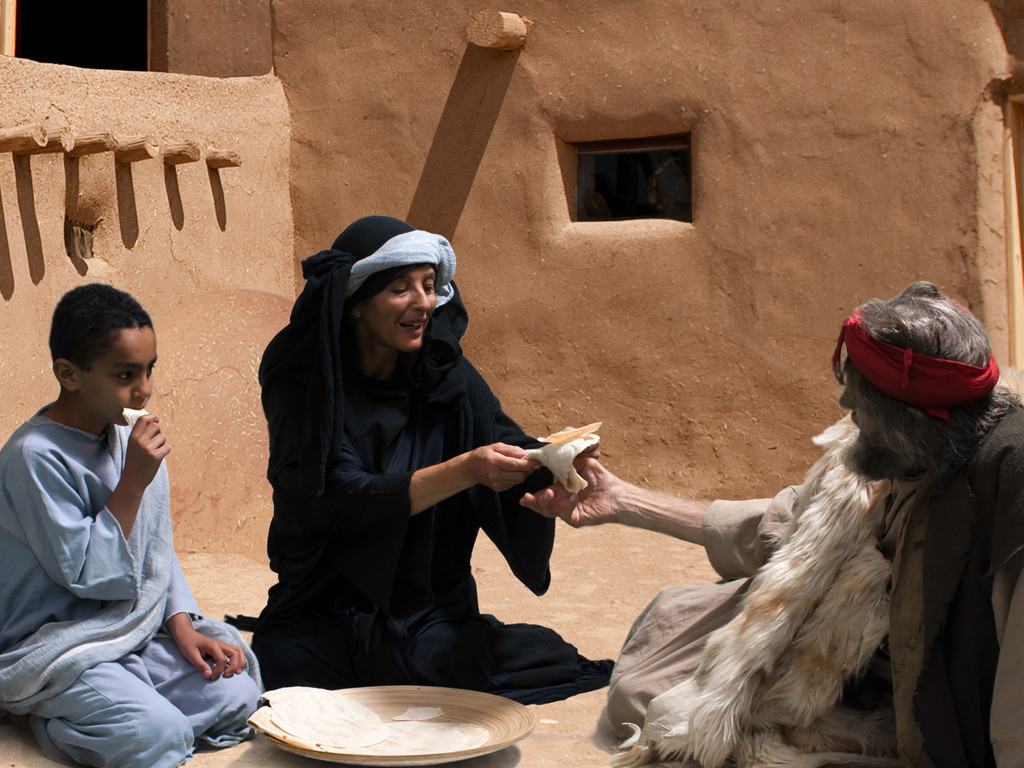
She could have easily denied the prophet’s request for food when she met him at the town gate. Without experiencing God’s grace, both she and her son would have eaten their final meal and faded into darkness. But her act of kindness helped her stay alive and provide for her family as well. She did not give out of her plenty or had excess food lying around the house but the generosity that God put in her heart helped her give her last ounce of food to the stranger at the door.
Generosity In Worship
In the gospels, we read about a woman who anointed Jesus with expensive perfume. In the presence of Jesus, she broke open an Alabaster jar filled with perfume and proceeded to pour it on Jesus’ head. The jar would have cost her a fortune and probably was meant for the purpose of seduction. Yet she chose to worship the LORD with that very same perfume. She could have sold the jar and bought flowers to throw at Jesus’s feet. However, she chose to worship Christ organically with what she had lying at her house even if it would have been frowned upon by the onlookers.
Why are you bothering this woman? She has done a beautiful thing to me.
Matthew 26:10 & 12 (NIV)
When she poured this perfume on my body, she did it to prepare me for burial.
Jesus stated that in doing so, the woman was able to prepare Jesus’ body for burial, something the affluent folks like Joseph and Nicodemus could do only post-mortem. If she had waited to think about the cost of her offering, she would have missed out on the opportunity to prepare Jesus’s body for burial. Her organic and spontaneous act of worship helped her do something the ladies who returned to the grave after observing the sabbath that Sunday morning did not get to experience.
True Generosity
Generosity according to Jesus is not defined by how much we give but by our intentions. People are satisfied when they offer up a tenth of their earnings every month in their local church, in the process willingly or unwillingly letting everyone know their economic status as well. But Jesus has commanded us to leave everything behind and follow Him. To the rich man, He said that he must sell all his possessions and give the proceeds to the poor before following Him. Yet that is something that we choose to ignore and follow the ways of the people around us. When we do give to the needy are we ensuring that even our close family members (Matthew 6:3) do not know about our generous act or are we the promoters of our own acts of kindness?
And if anyone wants to sue you and take your shirt, hand over your coat as well. If anyone forces you to go one mile, go with them two miles. Give to the one who asks you, and do not turn away from the one who wants to borrow from you.
Matthew 5:40-42 (NIV)
Though it may seem daunting to pursue Christ’s view on generosity, we can follow them with the help of the Holy Spirit. If we think that we can be generous on our own then we are gravely mistaken, as our generosity is limited by the month of the year or the observance of people around us. To truly impact someone’s life, we need to be generous enough to let the love of Christ flow through us. Only then can we put their needs over ours and impact the lives of the people around us in a meaningful way.
Above all, we need the grace of God upon us to help us exhibit true generosity, as seen in the lives of three remarkable women in Scripture. The poor widow gave out of her poverty, demonstrating selfless sacrifice. The widow who fed Elijah during a famine showed unwavering trust in God’s provision. The woman who poured out her best in worship of Jesus offered not her excess, but her all. What united them was not merely their identity as women but the divine Spirit of generosity that moved them to act. This same Spirit reflects the ultimate act of giving: the Son of Man leaving His heavenly throne for the cross on earth—a profound truth often overlooked amid the “festival of giving.” It is God’s Spirit, not man’s, that enables true generosity.


 The Jordan Valley
Reply