

Tyre was one of the most powerful and wealthy cities of the ancient world. Located on the Mediterranean coast in present-day Lebanon, it was a major Phoenician city-state renowned for maritime trade. By Ezekiel’s time in the sixth century BC, Tyre consisted of both a mainland settlement and a fortified island city about half a mile offshore. This island stronghold made Tyre extraordinarily difficult to conquer and gave its inhabitants a strong sense of security and superiority.
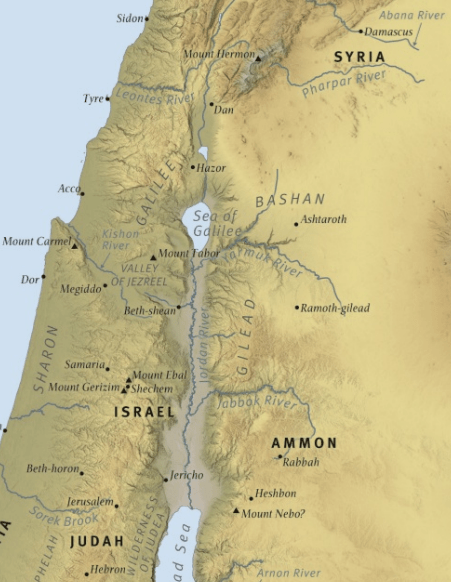
Economically, Tyre was unmatched in the region. Her ships sailed across the Mediterranean, and her merchants traded with distant lands including Tarshish, Egypt, Greece, and Arabia. She was famous for her purple dye, a luxury product associated with royalty. Timber from Lebanon, precious metals, fine textiles, and crafted goods passed through her ports. Wealth accumulated rapidly, and prosperity was the reason confidence and over time, confidence matured into pride.
When Jerusalem was under attack and eventually destroyed in 586 BC, Tyre did not grieve over its fall. Instead, the king saw a new opportunity. Jerusalem had served as a key land trade gateway connecting Arabia, Egypt, and Mesopotamia. With Jerusalem in ruins, the king of Tyre believed commercial advantage would now shift further into his hands. This opportunistic response is what the LORD told Ezekiel to call out, as it was not merely indifference, but a calculated readiness to profit from Judah’s destruction.
The King of Tyre: A Mere Mortal
The word of the LORD came to me: “Son of man, say to the ruler of Tyre, ‘This is what the Sovereign LORD says:
“‘In the pride of your heart
you say, “I am a god;
I sit on the throne of a god
in the heart of the seas.”
But you are a mere mortal and not a god,
though you think you are as wise as a god.
Ezekiel 28:1-2 (NIV)
Though only a man, the ruler of Tyre allowed his wealth, wisdom, and secure position to convince him he was like a god and beyond danger. His success made him proud, and he began to see himself as untouchable. While he was genuinely wise and had led Tyre to prosperity, his wisdom led to arrogance. The true issue was not his riches or ability, but his proud heart — for despite his claims, he remained a mortal man accountable before the LORD.
Why does the accumulation of influence, wealth, and wisdom lead us to challenge God’s authority and sometimes even question His existence?
The accumulation of influence, wealth, and wisdom can slowly shift the posture of the heart. When we lack resources or power, we are often aware of our need. Dependence comes naturally because we recognise our limitations. However, when wealth increases, dependence can decrease. Financial security creates the illusion of control. We begin to think we have secured our own future, protected our own health, and shaped our own destiny. In subtle ways, trust transfers from God to possessions.
Influence has a similar effect. When others listen to us, affirm us, and follow our direction, it becomes easy to confuse authority with self-sufficiency. The more options we have, the more we assume we are the source of our own success. Influence expands our choices, and those choices often reveal what our hearts truly desire.
Wisdom, especially worldly wisdom, can also produce distance from God. Intellectual confidence may lead some toward agnosticism, not necessarily because of deeper truth, but because knowledge can inflate pride. Human reasoning begins to sit in judgement over divine revelation. Instead of submitting to God’s authority, the mind seeks to evaluate it.
Yet influence, wealth and wisdom do not create pride; they expose what was already present. They simply give us more opportunity to act in line with our inner inclinations. When the heart is not fully surrendered, increased influence, resources, and knowledge provide more avenues to rely on self rather than God.
Therefore this is what the Sovereign LORD says:
“‘Because you think you are wise,
as wise as a god,
I am going to bring foreigners against you,
the most ruthless of nations;
they will draw their swords against your beauty and wisdom
and pierce your shining splendor.
Ezekiel 28:6-7 (NIV)
Because the king of Tyre believed himself to be as wise as a god, the LORD declares that judgement will come upon him. God would bring foreigners — the most ruthless of nations, referring to the Babylonians — to destroy him. They would shatter his pride, pierce his splendour, and bring him down to a violent death. The one who claimed divinity would face a humbling reality: in the presence of his killers, he would no longer boast, “I am a god.” Instead, he would be exposed as what he truly was — a mortal man. He would perish like one outside God’s covenant people, at the hands of foreign conquerors.
You were the seal of perfection,
full of wisdom and perfect in beauty.
You were in Eden,
the garden of God;
every precious stone adorned you:
carnelian, chrysolite and emerald,
topaz, onyx and jasper,
lapis lazuli, turquoise and beryl.
Ezekiel 28:12-13 (NIV)
Ezekiel’s lament over the king of Tyre describes a ruler who was greatly privileged, honoured, and beautifully adorned, yet ultimately ruined by pride. God traces his beginnings back to the garden of Eden, reminding all of us that he was not self-made. The king of Tyre was God’s creation, placed in a position of honour and responsibility by the LORD. He was blameless until wickedness was found in him. Through trade, he became rich, but his pride grew. He let his success go to his head, forgetting the Creator and sought to honor himself instead. His downfall did not begin with weakness, but with pride that grew out of his success, and wealth.
Because of his beauty and splendour, the king’s heart became proud, and his wisdom was corrupted. As a result, God cast him down in humiliation before other kings. His many sins and dishonest trade defiled what was meant to be sacred, bringing judgement upon himself. The very pride and corruption within him led to his destruction, reducing him to ashes before the watching nations. Those who once admired him were left appalled, for his end was sudden, shameful, and final.
In the same way, every person is God’s creation. All are given life by Him, and all are given the opportunity to walk in His presence. Yet mankind often rejects that nearness and chooses the wisdom of the world instead. The king of Tyre exchanged relationship with God for pride in worldly success. His story reveals that when a person trades fellowship with God for status, wealth, and self-exaltation, the end is loss rather than gain.
You were on the holy mount of God;
you walked among the fiery stones.
You were blameless in your ways
from the day you were created
till wickedness was found in you.
Ezekiel 28:14-15 (NIV)
How can people who walk closely with God fall into wicked ways?
People who appear to walk closely with God can fall into wicked ways when their hearts slowly drift out of alignment with Him. Outward closeness does not always mean inward surrender. A person may look devoted, speak correctly, and even serve faithfully, yet never truly submit their heart to God. In such cases, they are not walking closely with Him but are, in reality, deceiving themselves.Another danger is a sense of spiritual privilege. When someone has long experience, influence, or visible leadership, they may begin to think they are exempt from certain standards. They justify small compromises, believing their position or past faithfulness gives them permission. Pride quietly replaces humility. God’s silence can also be misunderstood.
When there is no immediate discipline or visible consequence, some assume God is unconcerned. Instead of recognising His patience as an opportunity to repent, they interpret it as approval or indifference. We must regularly measure our lives against God’s character, not against our reputation or outward activity. We must keep asking the Lord for correction and guidance in our next steps. True closeness to God is sustained not by privilege, but by humility, repentance, and dependence on Him.


 The Jordan Valley
Reply