

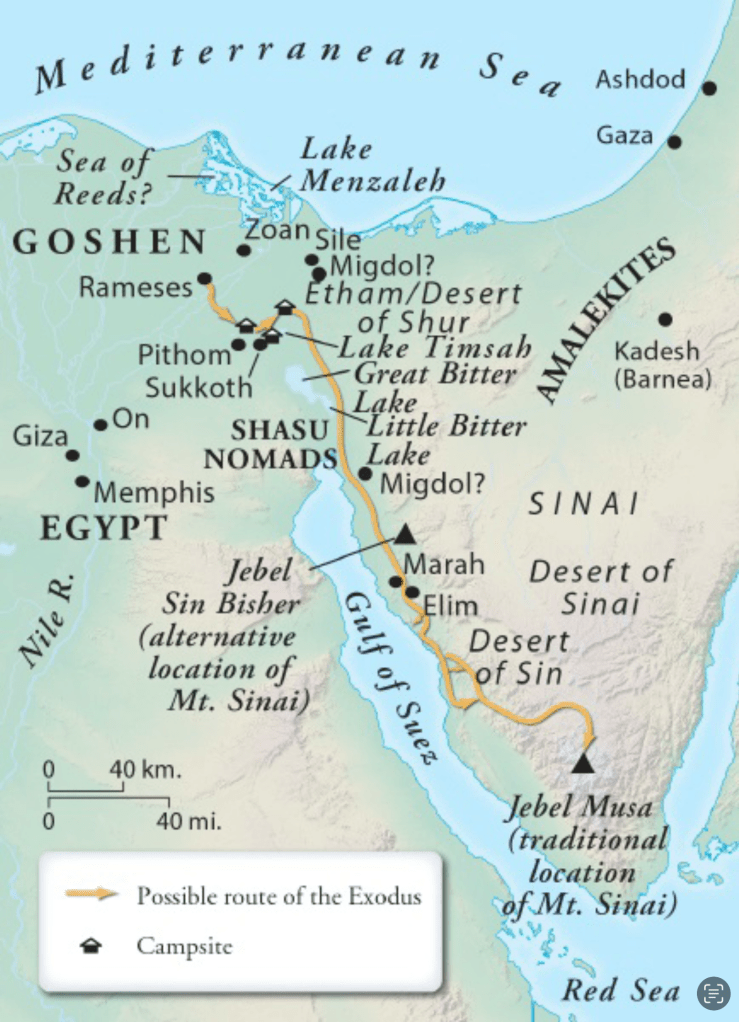
Just three days after narrowly escaping the jaws of death and celebrating the sight of Egyptian bodies floating in the Sea of Reeds, the Israelites were about to confront another familiar adversary—one they stubbornly refused to leave behind: their wavering faith in God, a weakness that repeatedly became their downfall. The Israelites arrived at Marah where they could not drink the water because it was bitter and the people once again started to grumble against Moses.
The LORD Heals the Waters
Then Moses cried out to the LORD, and the LORD showed him a piece of wood. He threw it into the water, and the water became fit to drink. – Exodus 15:25 (NIV)
The healing of the waters at Marah is similar to how God lead Elisha to heal the waters by sprinkling last into it (2 Kings 2), but it’s important to recognize that this was not a natural or herbal remedy. It was entirely God’s provision that transformed the water. By guiding Moses to the piece of wood, the LORD was making it clear that the healing power came from Him, not from any human intervention.
Moses’s immediate reaction was to cry out to the LORD—a reflection of both dependence and a wavering faith. Even Moses, in this moment, appears to be struggling with the enormity of his task. Just three days after the triumph at the Sea of Reeds, marked by songs of celebration, it seems surprising—and telling—that neither the people nor their leader could fully trust in God’s provision. God’s provision was leading His people to Elim, the land of twelve springs. Yet, the Israelites’ relentless distrust in God continually prolonged their journey and added unnecessary detours.
The LORD Who Heals Us
He said, “If you listen carefully to the LORD your God and do what is right in his eyes, if you pay attention to his commands and keep all his decrees, I will not bring on you any of the diseases I brought on the Egyptians, for I am the LORD, who heals you.” – Exodus 15:26 (NIV)
God reminded the Israelites not to be afraid, for He was the LORD who was for them, not against them. This verse is interpreted by many to suggest that if we fail to keep God’s commands, He may punish us with sickness during our time on Earth. However, what we often overlook is the unmerited grace of God that sustains us from the moment we are formed in our mother’s womb. Regardless of our sins, He allows the sun to shine on both the good and the wicked alike (Matthew 5:45-47).
Too often, we seek to rationalize suffering—our own or others’. Worse, we may blame someone’s suffering on their sins, attributing their plight to their transgressions, all while we ourselves enjoy God’s grace despite our own shortcomings. Instead, we should come to God in humility to seek understanding about the events in our lives, both the blessings and the trials. Only He holds the true reason for all that happens.
It’s also critical to remember that the ultimate consequence of rejecting God’s will is not merely physical suffering, but eternal separation from Him—a fate far worse than any sickness on this Earth. During their journey to the Promised Land, God provided for the Israelites in miraculous ways—like ensuring their clothes did not wear out and providing manna and quail for food. Not getting sick was yet another way He demonstrated His provision and care, showing His desire to sustain and guide His people to their inheritance.
A Land of Springs
Then they came to Elim, where there were twelve springs and seventy palm trees, and they camped there near the water. – Exodus 15:27 (NIV)
The scene at Elim almost feels like a mirage, waters surrounded by palm tress in the middle of the desert. Just beyond their frustration, God was leading the Israelites to Elim, a place of abundant provision with twelve springs and seventy palm trees. Yet, instead of trusting His timing, they complained about water, unwilling to wait for the blessing God was already preparing for them.
How often are we like the Israelites? When God is leading us toward His springs of abundant grace, we, too, grumble and demand immediate solutions to our problems. Our shortsightedness blinds us to His greater plan. If only we could resist the urge to be impatient—like Moses and his people—and instead trust in God’s perfect timing, how transformed our lives would be.
Too often, our lives reflect an “interim philosophy.” We focus on temporary fixes, content with short-term provisions, rather than looking toward the ultimate destination God has prepared for us. By surrendering our impatience and trusting in His eternal plan, we can truly experience the fullness of His grace and provision.
Discussion Questions
- How could the Israelites forget about God’s provisions just three days after witnessing the parting of the sea?
- Is our sickness a result of our disobeidince?
- Why do we struggle to patiently wait for God’s provision?


 The Jordan Valley
Reply