

Israel was devoid of a moral compass during the corrupt reign of king Ahab. So one day, God sent the prophet Elijah from Tishbe to Ahab’s court with His word warning, that there would be no rainfall until they changed their ways. This formidable drought led to a widespread famine in the region. Yet the occurrence of the drought exclusively in the northern kingdom (which had turned away from God and embraced Baal as their deity) served a purpose.
The people considered baal to be the god of rain and fertility and that had become their barrier to experiencing the Living God who had been their protector for all these years. However, when baal was unable to stop Yahweh from halting the rains it would have served as a revelation for the people of the northern kingdom, offering them an opportunity to abandon their sinful ways and seek reconciliation. Their nation would be a place of hope and renewal, where people could come to recognize the True God, experiencing His grace and mercy.
Similarly, we have also set limits on what we believe God is capable of doing for us. While we may recognize Jesus as the God of our Salvation, some doubt whether He can assist us with our daily challenges. There are those who feel that God is unable to provide them with their desires, leading them to seek fulfilment in worldly things. The condition of the Israelites serves as a reminder that God is in control of everything, and we must learn to depend on Him solely.
God’s Provisions
Elijah received a message from God, instructing him to hide out in the Kerith Ravine. He followed the instructions and was provided for by ravens, who brought him bread and meat in the morning and evening, and he drank from the brook. God asked Elijah to hide because He had bigger plans for him. Despite the challenges, Elijah’s life was preserved so that he could continue to play a significant role in God’s plan.
Some time later the brook dried up because there had been no rain in the land. Then the word of the LORD came to him: “Go at once to Zarephath in the region of Sidon and stay there. I have directed a widow there to supply you with food.”
1 Kings 17:7-9 (NIV)
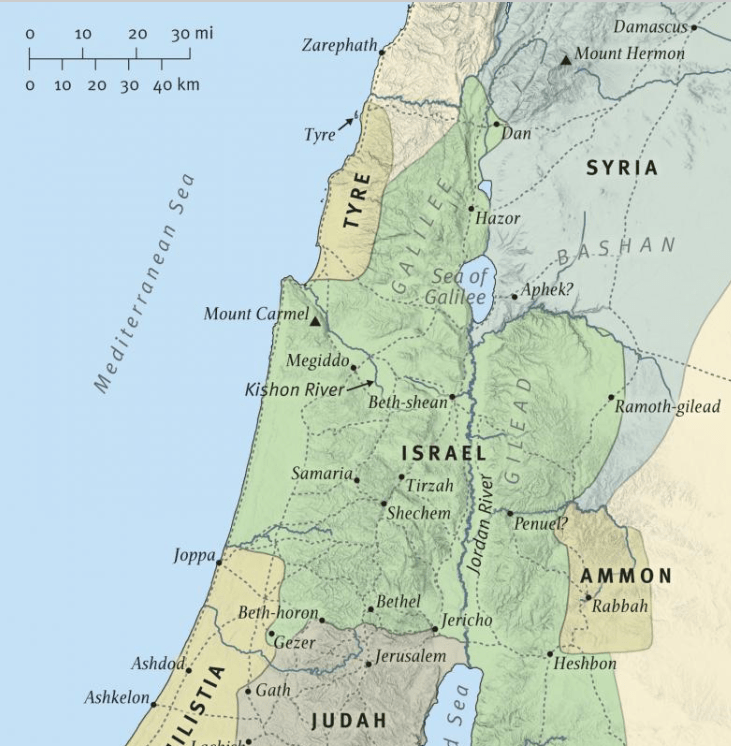
So Elijah journeyed to Zarephath, a Sidonian town where he would stay with a widow and her son for the duration of the famine. Sidon was also the birthplace of Jezebel, the wicked queen of Israel who reintroduced idol worship in the land. Instead of sending Elijah to another Hebrew family, God chose to send him into the midst of darkness to the town of Zarephath. When he came to the town gate, he saw the widow gathering sticks. He called out to her asking for a little water to drink. When she turned to get him water, he further asked for bread to eat. The widow let Elijah know that she had enough food for a single meal which she planned to have with her son and die thereafter. Perhaps she spoke about taking her own life as the thought of having her son die of starvation would not have been bearable.
Elijah said to her, “Don’t be afraid. Go home and do as you have said. But first make a small loaf of bread for me from what you have and bring it to me, and then make something for yourself and your son.
1 Kings 17:10-13 (NIV)
Amid a devastating famine, encountering a stranger requesting bread and water would have become a routine occurrence for the woman. It was likely that they would have made false promises of blessings if she provided them with something to eat. Thus, the widow may not have felt compelled to trust Elijah’s words. Additionally, hailing from the region of Sidon, a land of non-Jewish inhabitants, she may not have even shared Elijah’s belief in God. Nevertheless, she chose to offer Elijah the last of her family’s food.
She went away and did as Elijah had told her. So there was food every day for Elijah and for the woman and her family. For the jar of flour was not used up and the jug of oil did not run dry, in keeping with the word of the LORD spoken by Elijah.
1 Kings 17:15-16 (NIV)
The widow had given up hope and was ready to die, but then a spark of faith ignited within her. It was God who had prepared her heart, even without her realizing it. God sent Elijah to Zarephath as a testimony against the Israelites, indicating that even a Gentile widow would show faith in God. This demonstrates that God’s blessings are not exclusively for a specific group of people, but are available to all who have faith. It serves as a reminder that God’s will and providence extend beyond any particular nation or ethnicity.
The Widow’s Sun
Some time later the son of the woman who owned the house became ill. He grew worse and worse, and finally stopped breathing. She said to Elijah, “What do you have against me, man of God? Did you come to remind me of my sin and kill my son?”
1 Kings 17:17-18 (NIV)
The woman who had embraced the idea of death and was prepared to die alongside her son, now found herself suddenly devoid of her sole purpose to carry on. She cried out to the man of God asking if her son had died as a consequence of her sins.
Elijah tenderly took the child from his mother’s arms and carefully carried him to the upper room where he was staying. Gently laying the boy on the bed, he fervently cried out to the LORD, asking Him to bring back her son and sparing the widow further sorrow. The LORD indeed heard Elijah’s heartfelt plea, and the boy’s life returned to him, and he was restored. Elijah lifted the child and descended from the room into the house. As he handed the boy back to his mother, he joyfully exclaimed, “Look! Your son is alive!”
Then the woman said to Elijah, “Now I know that you are a man of God and that the word of the LORD from your mouth is the truth.”
1 Kings 17:24 (NIV)
The woman’s belief in Elijah as a messenger of God grew stronger over time. Although she often worried about having enough food, she initially only saw Yahweh as a provider of food, not imagining that He could raise her dead son. Our perception of God sometimes involves fear of punishment for any mistakes we make, but the widow’s understanding evolved. While she had previously acknowledged Elijah as a man of God, she now knew it in a more profound and experiential way, recognizing him as a true prophet of the Lord. She declared that the word of the Lord from Elijah’s mouth was indeed the truth. This experience became a pivotal point in convincing the Phoenician widow that God’s word was entirely trustworthy—a confession that even the Lord’s own people in Israel had failed to make.
Like the widow who believed that Elijah was sent by God, what makes us place our complete faith in Christ, believing that He was sent by God? From our childhoods, we have been told the redemption story, often making us numb to the immense sacrifice that Christ made on the cross. However, by experiencing the peace of God in our lives, His responses to our prayers, and witnessing His miraculous interventions our faith grows stronger. Just like the widow, when we start experiencing God and His provisions in our daily routines, that is when we will put our trust in Him completely.
Discussion Questions
- Why did God send a drought only to the northern kingdom of Israel when both nations were revolting against Him?
- If it was God’s plan to deliver the Israelites through Elijah, then why did He ask Elijah to hide?
- Why is God sending Elijah to Zarephath, were there not widows in Israel with whom he could have stayed?
- What made the widow believe that the flour and oil would not run out? Elijah could have been just running a con to rob her of food during the Famine.
- What makes us put our complete Faith on Christ that He was sent by God?



 The Jordan Valley
Reply