

With the rapid growth of the digital world, it has become necessary for us to periodically update the electronic gadgets we use. Over time, these gadgets become obsolete, prompting individuals to purchase the latest versions to maintain their status or the requirements of their jobs. The development of software has played a significant role in driving this need for frequent changes. Cell phone manufacturers diligently keep their customers informed about new versions, ensuring they stay updated with technological advancements.
Ironically, we often neglect to apply this same principle in our spiritual lives, despite being granted new grace each morning. Let us take a moment to reflect on the factors that prevent us from equipping ourselves with these spiritual updates.
The Transfiguration

The Gospel of Mark recounts the profound event where Jesus, accompanied by His disciples John, Peter, and James, ascended a mountain. As they stood there, a remarkable transformation took place before their eyes. Jesus was transfigured, and His garments became radiantly white, reminiscent of glistening snow. This extraordinary occurrence serves as a powerful testament to the teachings of Jesus, affirming that those who believe in God and pass away will experience eternal life. Jesus Himself emphasized this truth by affirming that the living God is the God of the living, not of the deceased.
The awe-inspiring sight served as a poignant reminder to the three disciples of the glorious destiny that awaited them beyond their earthly lives. Moreover, it provides us with a glimpse into the transformative power of being in constant communion with God, detaching ourselves from the concerns of this world. Through this process, we can once again reflect the image of God in which we were originally created.
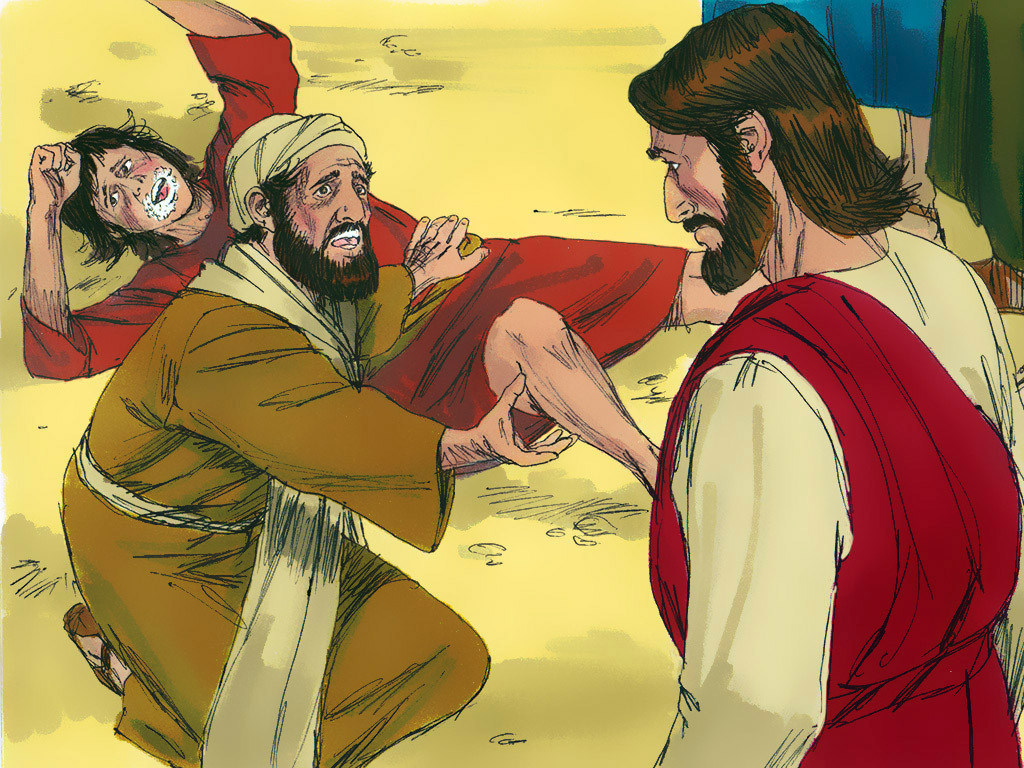
One can surmise that Jesus intended to instil in these three disciples a profound prayer life, enabling them to address the pressing needs of the world. Meanwhile, down the mountain, a desperate father sought healing for his son possessed by an evil spirit, serving as a symbolic reminder of the urgency of the hour and the profound importance of constant touch with God. (Mark 9)
Man Made Temples
Ignoring all of these insights Peter had the intention of constructing three tents, one for Moses, one for Elijah, and another one for Jesus.
Peter said to Jesus, “Rabbi, it is good for us to be here. Let us put up three shelters—one for you, one for Moses and one for Elijah.”
Mark 9:5 (NIV)
While discussing the three individuals, Peter surprisingly neglected to mention anything about himself and the two other disciples. This raises confusion as to why Peter would desire to confine these three in tents, while the living God happily accompanied them everywhere. Clearly, it was not Peter, but rather the devil within him, who influenced his actions. We are aware of the persistent doubts that plagued Peter’s mind, with Jesus even calling him satan on at least one occasion. Jesus foretold Peter’s denial and prayed for him, urging him not to lose his faith. After being strengthened, Peter was to guide his brethren to stand firm. Having overcome his fears and doubts, Peter realised that the same devil would prowl freely, seeking whom he could devour. Thus, Peter warned us about the strategies of the devil.
Be alert and of sober mind. Your enemy the devil prowls around like a roaring lion looking for someone to devour.
1 Peter 5:8 (NIV)
Despite this warning, people of God tried to capture the Living God within the man-made structures and formed religion and its norms thereby blocking the minds of people from reaching God freely. But God is not a God to remain in these man-made structures, rather He resides in our hearts. To inherit the living God we should break all the barriers in the way that Jesus shows us to reach the Father.
Sitting On One Spiritual Experience
Apart from religion and places of worship, tradition also plays a crucial role in deterring people from seeking a deeper connection with God. Many individuals limit their understanding of true God to these three aspects – religion, temples, and tradition. However, it is important to realize that John’s insight holds true: the one who resides within us is greater than everything in this world. If we truly comprehend the power and sovereignty of God, we will not yield to the influence of this world.
Even when we prioritize our devotion to God above all else, it is unfortunate how easily we can be misled by the devil into becoming fixated on a singular spiritual experience. This is the reason why we find ourselves amidst a multitude of religions, countless places of worship, and various denominations within specific faiths.
For example, when a devotee witnesses the glorious light of God atop a mountain, instead of seeking to hear His voice, the individual constructs a temple in that very spot and kindles a lamp with their own hands, inviting others to worship the light. Similarly, when someone experiences God’s healing power through the stripes of His Son, instead of comprehending His grace, they hastily make a pledge to rely solely on miracles, discouraging the faithful from seeking medical treatment or utilizing medicine for healing.
Furthermore, individuals who encounter a manifestation of God’s power through a ministry can become entrenched in that singular experience, subsequently establishing their own healing and deliverance ministry, which can hinder both themselves and others from finding true healing of their hearts. Conversely, there are those who deny the confirming power and manifestation of God, choosing to depend solely on the word of God and engage in a meditative practice while rejecting the power of the Holy Spirit.
Most devotees, upon witnessing the healing and deliverance experienced by others, often develop a limited expectation of how God should interact with them, consequently overlooking the authentic touch of God. A man who had been plagued by illness for 38 years was on the verge of missing an encounter with Jesus, as he placed his hope in the assistance of others to reach the stirring waters (John 5).
In essence, each individual finds themselves fixated on a particular spiritual experience, yearning for God to replicate it repeatedly instead of anticipating new and diverse encounters. Furthermore, in our pursuit, we often fail to perceive God as a whole but rather resemble the blind individuals who, by merely touching various parts of an elephant, attempted to visualize its complete form. Consequently, the one who felt the trunk compared the elephant to a lengthy python, while another who touched the ear perceived it akin to a large petal, and yet another who encountered the leg believed it to resemble the sturdy trunk of a tree. Regrettably, they failed to synthesize their respective insights to grasp the true image of the elephant.
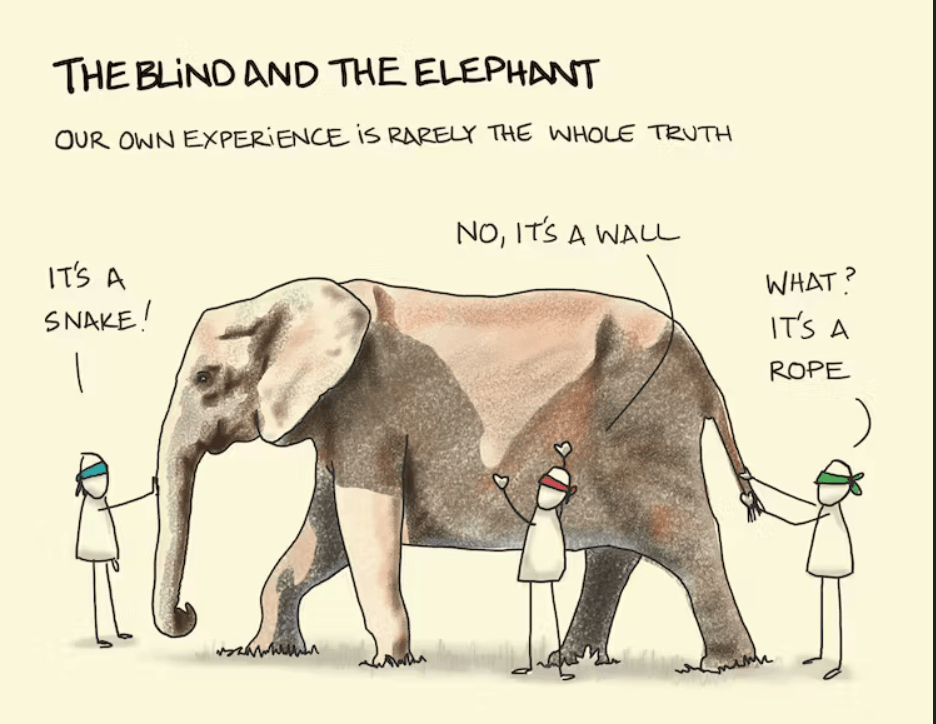
To comprehend the nature of the true God, it is imperative that we transcend our individual experiences and knowledge, and embrace a more expansive and comprehensive understanding. By moving beyond the limitations of our personal insights, we open ourselves to a multitude of experiences and gain a holistic perspective on our Creator.
Therefore let us move beyond the elementary teachings about Christ and be taken forward to maturity, not laying again the foundation of repentance from acts that lead to death, and of faith in God, instruction about cleansing rites, the laying on of hands, the resurrection of the dead, and eternal judgment.
Hebrews 6:1-2 (NIV)
A Logical Approach
God created the Earth and the Heavens, and everything in them. He entrusted mankind with the responsibility to govern and cultivate His creation. However, due to man’s disobedience, this authority was seized by the devil. Despite this, God did not revoke the blessings intended for humanity. He continues to provide light and rain to both the righteous and the wicked. These essential provisions are readily accessible to all individuals, regardless of their religious affiliations. The sun’s rays do not discriminate against any particular community, nor does the rain favour a select group of people. Similarly, the Spirit of God is available to all individuals as a means to recognize Jesus as the Messiah.
Now to each one the manifestation of the Spirit is given for the common good.
1 Corinthians 12:7 (NIV)
This is how you can recognize the Spirit of God: Every spirit that acknowledges that Jesus Christ has come in the flesh is from God, but every spirit that does not acknowledge Jesus is not from God.
1 John 4:2-3a (NIV)
As all the provisions are given by God to us freely, the Spirit of God is also given to us freely to recognise God. Further, Paul in his letter to Romans clarifies it more clearly.
But what does it say? “The word is near you; it is in your mouth and in your heart,” that is, the message concerning faith that we proclaim: If you declare with your mouth, “Jesus is Lord,” and believe in your heart that God raised him from the dead, you will be saved.
Romans 10:8-9 (NIV)
The message contained within these words reflects a truth that extends to all individuals, just as the rays of the sun graciously illuminate everyone without discrimination. Yet, it is puzzling why there are numerous ritualistic barriers that hinder our path to reach the true God. When such inquiries arise within us, we can trust that God not only holds the key to elucidating this quandary but also enlightens us, unveiling the intricacies concealed by the veils of the earthly realm. Through this approach, God will open our eyes to see the light of the Gospel which is freely available to all mankind.
Understanding The Power Of God
God has bestowed upon us a distinct and individual nature, setting us apart from one another. Our fingerprints and the colour of our iris exemplify this uniqueness. The creation is unparalleled, for God, as the ultimate creator, has no need to imitate or replicate existing designs. In the absence of anything, God brought forth the world, and in the absence of illumination, God created light. Just as God’s grace is renewed each day, His creations are also perpetually new. Abraham comprehended that God possesses the power to summon even non-existent things into existence.
As it is written: “I have made you a father of many nations.” He is our father in the sight of God, in whom he believed—the God who gives life to the dead and calls into being things that were not.
Romans 4:17 (NIV)
We are unable to fathom what lies in store for us in God’s plan, as sometimes it exceeds our comprehension. Therefore, let us refrain from squandering our precious time by anticipating a moment we have already experienced, instead, let us anticipate greater things from God. Let us eagerly await God’s blessings of new and extraordinary experiences in our lives.
See, I am doing a new thing!
Isaiah 43:19 (NIV)
Now it springs up; do you not perceive it?
I am making a way in the wilderness
and streams in the wasteland.
Our Role Model
The author of the book of Hebrews asked us to look unto Jesus, our role model.
….And let us run with perseverance the race marked out for us, fixing our eyes on Jesus, the pioneer and perfecter of faith. For the joy set before him he endured the cross, scorning its shame, and sat down at the right hand of the throne of God.
Hebrews 12:1b-2 (NIV)
God bestowed upon His Son a unique and overwhelming experience, one that was beyond comprehension. Suddenly, Jesus became acutely aware of the immense weight of the sins of the entire world placed upon His shoulders. In the face of this unfamiliar and daunting ordeal, He beseech His Father to spare Him from this arduous task.
Father, if you are willing, take this cup from me; yet not my will, but yours be done.”
Luke 22:42 (NIV)
However, rooted in His unwavering faith in His Father, Jesus swiftly realigned His thoughts and willingly surrendered to His Father’s will. There are moments when God’s unconventional ways may seem unbearable, yet by embracing His unconditional love, we can readily yield to His flawless purpose.


 The Jordan Valley
Reply